 English
 Deutsch
 Indonesia



Content
Pick the wrong valve for a slurry line and you'll know it fast — clogged seats, stuck gates, and unplanned downtime. Knife gate valves were originally built for the pulp and paper industry precisely because conventional valves kept failing on fibrous, particle-laden media. Decades later they remain the go-to choice for any application that would choke a standard gate or butterfly valve. This article breaks down exactly where knife gate valves win, where they fall short, and how they stack up against the most common alternatives.
What Makes a Knife Gate Valve Different
The defining feature is the blade-shaped gate — thin, sharp-edged, and designed to slice through solids rather than be stopped by them. The body is compact (wafer or lugged, no extended face-to-face dimension), which makes installation easier in tight pipework. A standard gate valve achieves its seal through a thick wedge pressed between two machined seats; a knife gate valve uses a packing gland that seals around the gate itself rather than the stem.
That structural simplicity translates directly into weight. A 16-inch knife gate valve typically weighs under 300 lb, while an equivalent ANSI gate valve exceeds 1,200 lb — a 75% reduction that matters on platforms, elevated structures, and anywhere crane access is limited. Cost follows the same pattern: lighter, simpler construction means a meaningfully lower unit price.
Knife Gate vs. Gate Valve: The Core Trade-Off
Both valve types are on/off devices — neither is suitable for throttling, because a partially open gate creates turbulence that erodes the seating surfaces over time. The differences emerge in the media they handle and the pressures they tolerate.
| Factor | Knife Gate Valve | Standard Gate Valve |
|---|---|---|
| Gate shape | Thin blade / sharp edge | Thick wedge or parallel plate |
| Best media | Slurries, pulp, fibers, powders | Clean water, gas, oil |
| Pressure rating | Low to medium | High (steam, natural gas) |
| Weight (16") | < 300 lb | > 1,200 lb |
| Face-to-face length | Short (wafer/lugged) | Long (flanged) |
| Sealing direction | Usually uni-directional | Bi-directional |
| Typical industries | Mining, wastewater, pulp & paper, cement | Oil & gas, water distribution, steam |
Gate valves offer superior sealing at high temperatures and pressures, but their thick wedge gates are vulnerable to wear when particulate media is present. The knife gate's blade cuts through those particles cleanly, preventing the clogging that would lock a conventional gate valve in place.
Knife Gate vs. Butterfly Valve
Butterfly valves are compact and cost-effective for clean or mildly contaminated fluids. Their disc rotates 90° to open, which creates a low-pressure-drop flow path — an advantage in large-diameter water systems. The disc always remains in the flow path, however, which causes turbulence with abrasive media and accelerates wear on the seat and disc edges.
Knife gate valves eliminate the disc-in-flow-path problem entirely. The gate retracts fully out of the bore when open, leaving an unobstructed passage. For slurry, ore pulp, or any medium prone to sedimentation, this matters: butterfly valves can trap solids around the shaft and disc, while knife gates — which typically have no bottom groove — resist buildup and clogging.
The trade-off: butterfly valves for clean and mildly viscous media are more economical and offer finer flow modulation when partially opened. Knife gates do not provide proportional control.
Knife Gate vs. Ball Valve
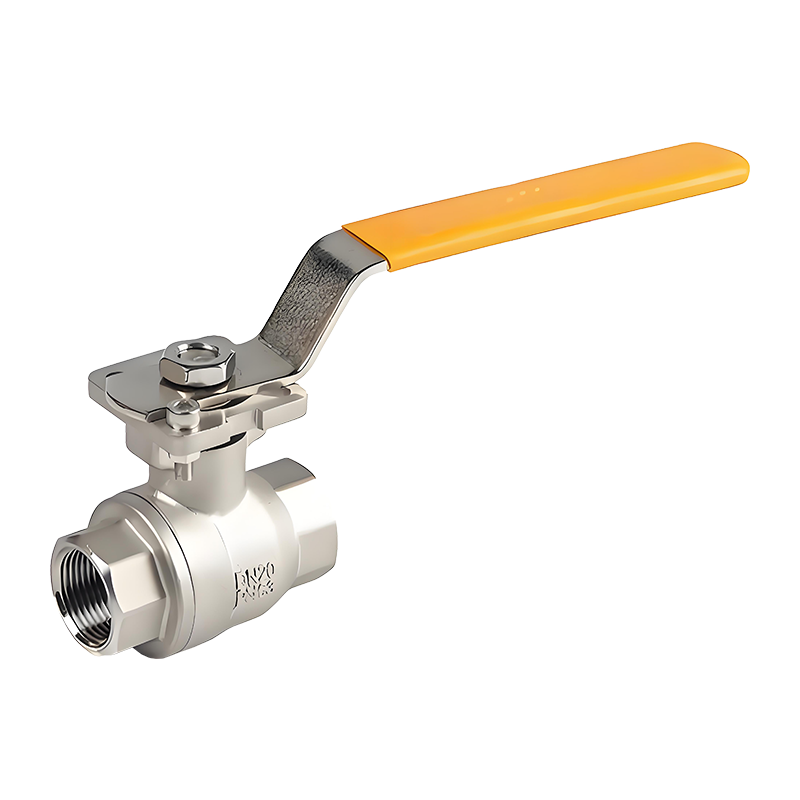
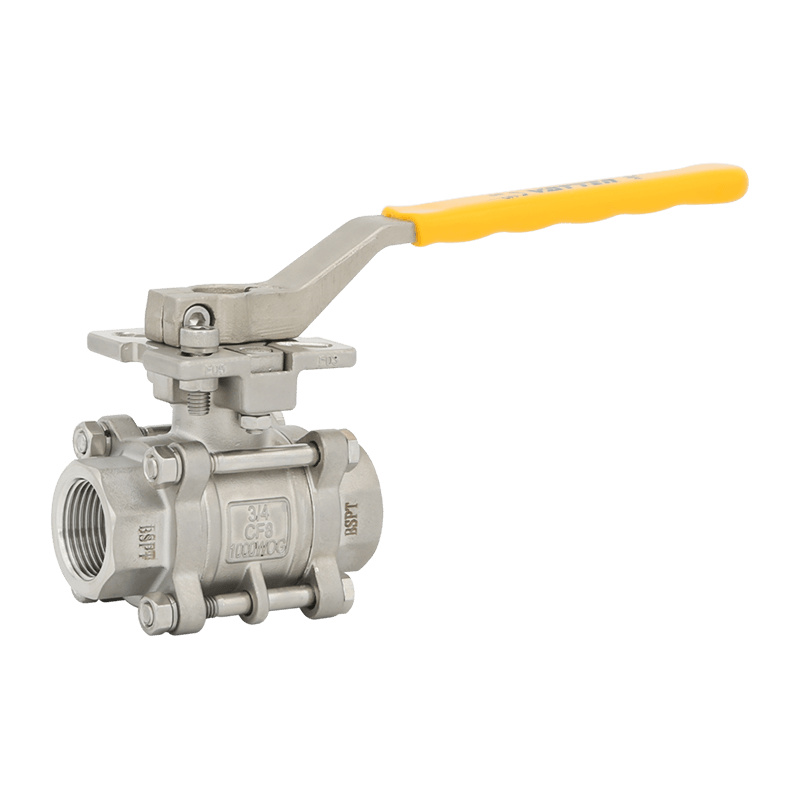
Ball valves deliver fast quarter-turn operation and excellent bi-directional sealing. For clean, non-viscous fluids they are hard to beat. The problem with slurry applications is the ball cavity: solid particles accumulate in the recesses around the ball, abrade the PTFE seats, and eventually prevent a tight shut-off. Maintenance intervals shrink considerably in those conditions.
A knife gate's design avoids internal cavities where solids can settle. It is purpose-built for media that would destroy a ball valve's seats within a few operating cycles. Ball valves for clean fluid shut-off remain a better choice where high-pressure sealing integrity is the priority.
Knife Gate vs. Diaphragm Valve
Diaphragm valves isolate the actuator mechanism from the process fluid entirely — a key advantage in pharmaceutical, food, and highly corrosive chemical applications where contamination or stem leakage is unacceptable. Their flexible diaphragm, however, limits both pressure and temperature ratings and is susceptible to mechanical damage from abrasive solids.
Knife gate valves handle far more aggressive media and larger pipe sizes, but they cannot match the hygienic isolation of a diaphragm design. The diaphragm valve's separation of fluid and actuator is irreplaceable in sanitary processes; in heavy-duty industrial environments, the knife gate is the more durable choice.
Actuation Options
Modern knife gate valves support manual, pneumatic, and electric actuation — the same flexibility offered by gate and butterfly valves. Pneumatic knife gate valves respond quickly and are well-suited for automated process lines, while electric knife gate valves integrate easily with digital control systems where positional feedback is required. Manual knife gate valves remain common in lower-frequency applications where automation is unnecessary.
Where Knife Gate Valves Fall Short
No valve type is universal. Knife gate valves have three consistent limitations that engineers should account for at the selection stage.
Pressure rating. Because the blade is unsupported across its full span during operation, knife gates are generally limited to low-to-medium pressure systems. High-pressure steam or gas pipelines require the more robust construction of a full-body gate or globe valve.
Sealing direction. Most knife gate valves are uni-directional. Bi-directional sealing is available on select models but adds cost and should be specified explicitly if the process demands it.
Clean-fluid economics. For applications involving clean, non-viscous fluids, a knife gate valve is overengineered. A standard gate or butterfly valve will deliver the same on/off function at lower cost and with simpler maintenance.
Selecting the Right Valve: A Practical Summary
The decision comes down to three questions: What is in the fluid? What pressure and temperature must the valve withstand? How frequently will it cycle?
If the fluid carries solids, fibers, or slurry — and operating pressure is moderate — a knife gate valve is almost always the correct answer. Wastewater treatment, mining, cement, pulp and paper, and power generation (fly ash, bottom ash handling) are classic knife gate applications. For clean fluid at high pressure, a gate valve or ball valve is more appropriate. For hygienic processes, a diaphragm valve cannot be substituted. For large-diameter, low-contamination water systems, a butterfly valve is typically the most cost-effective solution.
Understanding these boundaries prevents both under-specification (using a butterfly valve on slurry and replacing it every six months) and over-specification (installing a heavy ANSI gate valve where a fraction of the cost and weight would do the job).