 English
 Deutsch
 Indonesia


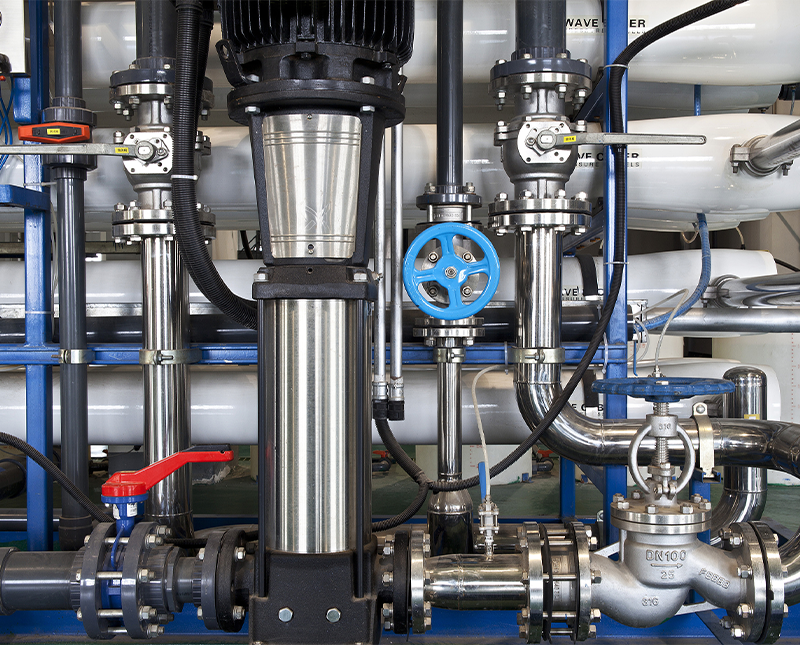
In industries such as mining, metallurgy, chemical, power generation, and wastewater treatment, media like slurry, mineral slurry, and dust often contain a large number of hard particles, high-concentration solid mixtures, or high-hardness dust.The problems of wear, corrosion and clogging on valves are extremely prominent.Under such harsh conditions, ordinary valves are prone to issues like seal failure, valve core wear, and sticking during opening and closing, leading to system shutdowns and increasing maintenance costs. To address these challenging operating conditions, the core focus of valve selection must balance four key characteristics: wear resistance, erosion resistance, anti-clogging performance, and corrosion resistance. The following outlines the most durable valve solutions from three perspectives: suitable valve types, material matching, and operating condition-based selection.
First, here are several types of core durable valves and their performance advantages:
Wear-resistant ceramic knife gate valve is the top choice for highly abrasive granular media, especially suitable for scenarios involving ore slurry, mud, fly ash, etc. Its flow path is straight-through with no dead corners, and the gate is designed in a knife-like blade shape, allowing it to cut through particles and fibers during opening and closing to prevent clogging. When the valve plate is fully retracted, the flow path is unobstructed, preventing media buildup. The valve body is typically made of carbon steel or stainless steel lined with alumina ceramic or silicon carbide ceramic, achieving a hardness of HRA 88 or above, with wear resistance more than 10 times that of ordinary steel. The sealing surface features a ceramic-to-ceramic hard seal, capable of withstanding temperatures up to 450°C, with zero leakage and excellent erosion resistance. It is suitable for tailings slurry, coal slurry, fly ash from power plants, cement dust, and other applications, particularly for media with particle sizes of 1–10 mm and concentrations exceeding 50%.
The eccentric semi-ball valve is more suitable for medium to high-pressure viscous slurries. Its eccentric structure combined with a hard sealing mechanism reduces friction between the valve core and the valve seat during opening and closing, thereby minimizing wear on the sealing surfaces. The full-bore design results in low flow resistance, allows the passage of large particulate matter, and resists clogging. The valve core is typically hardfaced with tungsten carbide, achieving a hardness of HRC 60 or above, while the valve body is made of carbon steel, chromium-molybdenum steel, or duplex steel, offering a balance of strength and corrosion resistance. It is suitable for high-viscosity slag slurry, sludge mixtures, particulate-laden wastewater, and operating conditions with pressures ranging from 1.6 to 10 MPa and temperatures not exceeding 300°C.
For low-pressure, highly abrasive soft media, a pinch valve lined with polyurethane or rubber is an economical and durable choice. It opens and closes by compressing an elastic sleeve, with only the sleeve coming into contact with the media, so the valve body itself experiences no wear. The flow path is free of dead corners, and the elasticity of the sleeve can wrap around particles to prevent clogging. Maintenance only requires replacing the sleeve, resulting in very low costs. The sleeve material is typically polyurethane (with wear resistance 5–8 times that of rubber) or neoprene rubber, offering excellent wear resistance, acid/alkali resistance, and aging resistance. The valve body is made of cast iron or carbon steel. This valve is suitable for slurries, sludge, and ore powder slurries under pressures below 1.6 MPa, as well as media containing soft particles or fibers.
The wear-resistant hard sealing ball valve is suitable for fine particle dust and applications requiring precise shut-off, particularly fine dust and small-particle ore slurries. It operates with a 90°rotary opening and closing motion and features a scraper structure that automatically removes particles from the sealing surface, preventing sticking and enabling self-cleaning. The valve body and seat are typically hardfaced with Stellite alloy or coated with ceramic, providing excellent erosion and wear resistance. The valve body is made of 316L stainless steel or duplex steel, making it suitable for corrosive media. This valve is ideal for fine dust with particle sizes smaller than 1 mm, low-concentration slurries, coal powder conveying, and other applications that require frequent opening/closing and precise shut-off.
The matching of materials with operating conditions is key to valve durability, with approximately 70% of durability depending on this factor. Precise selection must be made based on the characteristics of the medium:
- When the Mohs hardness of particles is below 5 (e.g., coal, sludge), high-chromium cast iron or duplex steel may be selected.
- When hardness is between 5 and 7 (e.g., quartz sand, slag), ceramics or tungsten carbide alloys are suitable.
- When hardness exceeds 7 (e.g., corundum chips), silicon carbide ceramics must be used.
In terms of concentration of medium:
- Low concentration (≤30%) – suitable for hard sealing ball valves.
- Medium concentration (30%–60%) – suitable for eccentric semi-ball valves.
- High concentration (>60%) – ceramic knife gate valves or pinch valves are the first choice.
If the medium contains acids, alkalis, or chloride ions, the valve body should be made of 316L stainless steel, duplex steel, or Hastelloy, while the sealing surfaces should be made of corrosion-resistant ceramics or alloys to avoid combined failure from corrosion and wear.
Regarding temperature and pressure:
- For high-temperature conditions exceeding 200°C, rubber or polyurethane materials must be abandoned in favor of metal hard seals.
- For high-pressure conditions exceeding 10 MPa, forged valve bodies with hard alloy internals should be selected.
For specific operating conditions, the optimal valve selection can be made based on the medium type:
- Slurry (containing sand, gravel, silt): Choose a polyurethane-lined pinch valve for low-pressure applications, and a ceramic knife gate valve for medium-to-high-pressure applications.
- Ore slurry (high-concentration hard particles): A ceramic knife gate valve is the first choice; for viscous ore slurry under medium-to-high pressure, an eccentric semi-ball valve is recommended.
- Dust: For fine dust, select a wear-resistant hard sealing ball valve; for coarse dust, choose a ceramic slide valve.
To extend valve service life, the following key measures should also be taken:
- Avoid throttling use: Knife gate valves and pinch valves are best used only as on/off valves to reduce prolonged erosion of the sealing surfaces by the medium.
- For high-frequency opening and closing applications: It is advisable to equip pneumatic or electric actuators. In conditions prone to clogging, a purge port can be added.
- Regular maintenance: For ceramic valves, inspect the wear condition of the sealing surfaces; for pinch valves, replace the sleeve periodically. These measures effectively reduce the risk of failure.
In summary, when selecting valves for slurry, ore slurry, and dust conditions, the core principles are clog-resistant structure and wear-resistant materials. The ceramic knife gate valve is suitable for the vast majority of high-wear particle scenarios; the eccentric semi-ball valve excels in viscous, medium-to-high-pressure conditions; the pinch valve is an economical choice for low-pressure applications; and the hard sealing ball valve is ideal for shut-off control of fine dust. By precisely selecting the valve based on the actual hardness, concentration, corrosiveness, temperature, and pressure parameters of the medium, and performing regular maintenance, valve service life can be increased by 3 to 5 times, significantly reducing system maintenance costs and ensuring continuous and stable operation under harsh conditions.