 English
 Deutsch
 Indonesia


Content
- 1 What Is a Double Block and Bleed?
- 2 How the Block-and-Bleed Sequence Works
- 3 DBB vs DIB: Choosing the Right Isolation Arrangement
- 4 Where Double Block and Bleed Is Standard Practice
- 5 Selecting DBB Hardware: Bore, Seat, Body and Actuation
- 6 Testing, Installation and Field Mistakes
- 7 FAQ: Double Block and Bleed in Practice
A leaking seat on a 40 bar hydrocarbon header can take a plant offline for a week, and the answer is usually three small symbols on a P&ID: two blocks and a bleed. Double block and bleed is one of the few isolation arrangements where the piping spec, the valve datasheet and the operating procedure all have to agree before anything is ordered.
This guide covers what double block and bleed means, how the closing and venting sequence really works, where it differs from double isolation and bleed, and the seat, cavity and actuation choices that decide whether the arrangement still holds after its first turnaround.
What Is a Double Block and Bleed?
Double block and bleed is an isolation arrangement built from two sealing elements in series in the same flow path, with a bleed or vent connection between them that can be opened to prove that neither sealing element is passing.
It is a configuration, not a single product category. In small sizes it is normally one valve body that already contains two seats and a bleed port, which keeps the assembly compact and removes two flanged joints. From roughly 3 in. upward, the same function is usually delivered by two separate valves with a tee or spool between them: easier to maintain, but every added flange is another potential leak path.
What both versions must deliver is identical. A genuinely independent second barrier, and a cavity that can be vented and observed. A single ball valve with a drain plug is not a double block and bleed, however it is labelled on the purchase order.
How the Block-and-Bleed Sequence Works
The bleed valve is opened only after both block valves are fully closed. Opening it earlier proves nothing, because the cavity was never isolated from the process in the first place.
- Close the primary block, the upstream valve, and confirm the position indicator.
- Close the secondary block downstream, trapping the cavity between two seals.
- Open the bleed to a safe destination: a closed drain, a flare header, or a rated hose to atmosphere.
- Watch the vent. A short release of trapped fluid is normal; a sustained flow means one block is passing and the isolation is not valid.
- Carry out the work downstream with the bleed left open for the whole duration.
- To restore, close the bleed first, then open the secondary block, then the primary. Reopening upstream first pushes line pressure against a closed vent and a seated cavity.
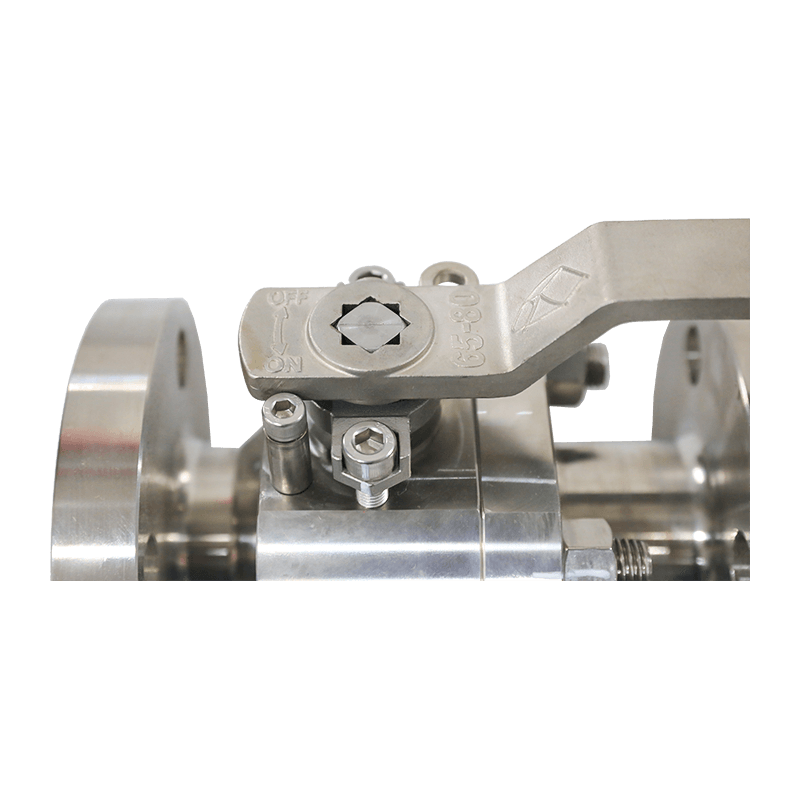 VATTEN Manual High-Pressure Ball Valve for Isolation DutyManual high-pressure ball valve with POM seat, WCB/SS304/SS316 body, and multiple connection options for isolation in petroleum, chemical, and water systems.View Product →
DBB vs DIB: Choosing the Right Isolation Arrangement
Double block and bleed gives two seals and one vented cavity and is intended for unidirectional isolation. Double isolation and bleed gives two seals with a vent on each side of the assembly, so it isolates against pressure arriving from either direction.
| Feature | DBB | DIB |
| Sealing barriers | Two, in series | Two, sealing from both sides |
| Vent points | One, between the blocks | Two, one on each side of the cavity |
| Design direction | Unidirectional | Bidirectional |
| Secondary seat | Single piston effect, cavity vents to one side | Self-relieving, cavity vents to both sides |
| Body envelope | Shorter, lower cost | Longer, more machined features |
| Typical use | PSV isolation, instrument root valves, sampling | Tie-ins, crossover lines, shared headers |
The specification mistake that costs money is calling for DBB where the downstream side can be pressurised by a second source: a crossover, a shared header, a pump discharge, a connected vessel. A standard DBB is not built to hold that.
Where Double Block and Bleed Is Standard Practice
DBB appears wherever a line must be positively isolated without cutting in a spade or blind: pressure relief valve isolation, instrument root valves, sampling nozzles, pump headers, and flare or drain lines.
Oil, gas and hydrocarbon
PSV inlet isolation, compressor and pump suction headers, metering runs and flare lines where a blind would mean a shutdown to install.
Chemical and petrochemical
Acid and solvent transfer, reactor feed lines, and sampling points where the medium decides the trim more than the arrangement does.
Power, water and utilities
Chemical dosing lines, ammonia injection skids, condensate sampling and filter changeout points on continuous processes.
In abrasive or high-temperature duty the trim decision carries more weight than the arrangement. Metal-seated ball valves for extreme operating conditions explain why a hard-faced seat is specified where a soft seat would cold-flow, score or extrude into the flow path.
Selecting DBB Hardware: Bore, Seat, Body and Actuation
Body style rarely decides whether a DBB arrangement survives. Seat material, cavity relief behaviour and actuation do, and they are usually the last three items anyone checks.
Bore and port size
Full bore keeps pigging possible and pressure drop low. Reduced bore shortens face-to-face length and lowers cost, at the price of higher velocity through the seat. Match the bore to the line class and the cleaning routine, not to the cheapest line on the quotation.
Seat material and cavity relief
Soft seats in PTFE, RPTFE or PEEK hold bubble-tight at low temperature but creep under sustained load and are attacked by some solvents and amines. Metal seats with a hard facing hold up in abrasive and high-temperature service. Liquid trapped between two closed seats expands as the line heats up, and if the seats cannot relieve that pressure the cavity can lift a seat and destroy the isolation. Confirm the vent direction with the supplier, and check seat and body ratings against ASME B16.34 pressure and temperature limits rather than the headline catalogue figure.
Actuation: manual, pneumatic or electric
Manual blocks are the right answer for turnaround and maintenance isolation, where the operator walks the sequence and the vent is watched by a person. They are cheap to own and slow to operate remotely.
Manual DBB
- Lowest initial cost and easiest field repair
- Sequence discipline depends entirely on the operator
- Typical for PSV isolation and instrument root valves
Actuated DBB
- Fast, repeatable sequencing from the control room
- Needs positioner, limit switch and solenoid accessories
- Typical for ESD duties, skids and unattended stations
Pneumatic blocks cycle quickly and fail safe on air loss, which is why they dominate automated DBB stations on skids and headers.
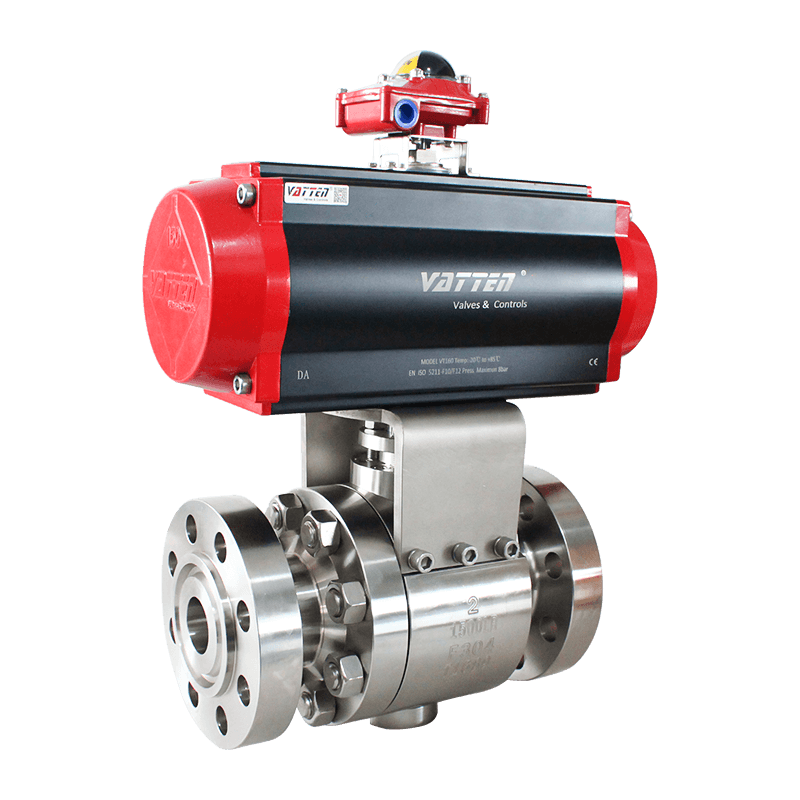 VATTEN Pneumatic High-Pressure Ball Valve for Automated DBB StationsPneumatic high-pressure ball valve with aluminum alloy actuator and POM seat, suited to automated DBB stations and high-pressure gas or hydraulic systems.View Product →
Where the block has to seal at class 900 and above with frequent cycling, the body and seat hardware have to be specified together rather than picked from separate catalogues.
Testing, Installation and Field Mistakes
A DBB arrangement is only as reliable as its seat test, its vent routing, and the discipline of the person who restores it after maintenance.
| Check | What it proves | Acceptance |
| Shell test | Body and joint integrity | Held at rated pressure, no visible leakage |
| Seat test, each side | Each block seals independently | Leakage within the specified rate for the class |
| Cavity and bleed test | Vent path is clear, cavity holds | Bleed vents freely with no back pressure |
| Cycle test | Actuator, positioner and switch work together | Full travel, correct feedback at both ends |
- Venting before both blocks are closed, which proves nothing and can release full line pressure at the vent.
- Leaving the bleed closed after the job, turning a DBB into two ordinary valves in series.
- Routing the bleed to a drain that can develop back pressure, so the cavity is never truly vented.
- Ignoring cavity thermal relief on liquid service, where trapped fluid expands and lifts a seat.
- Specifying a soft seat on abrasive or high-temperature duty because it is the standard stocked option.
- Undersizing the bleed, so a large cavity takes many minutes to vent and operators stop waiting for it.
On automated stations the two blocks are normally electric or pneumatic actuated and driven from the control system, with the bleed valve interlocked so the sequence cannot run out of order.
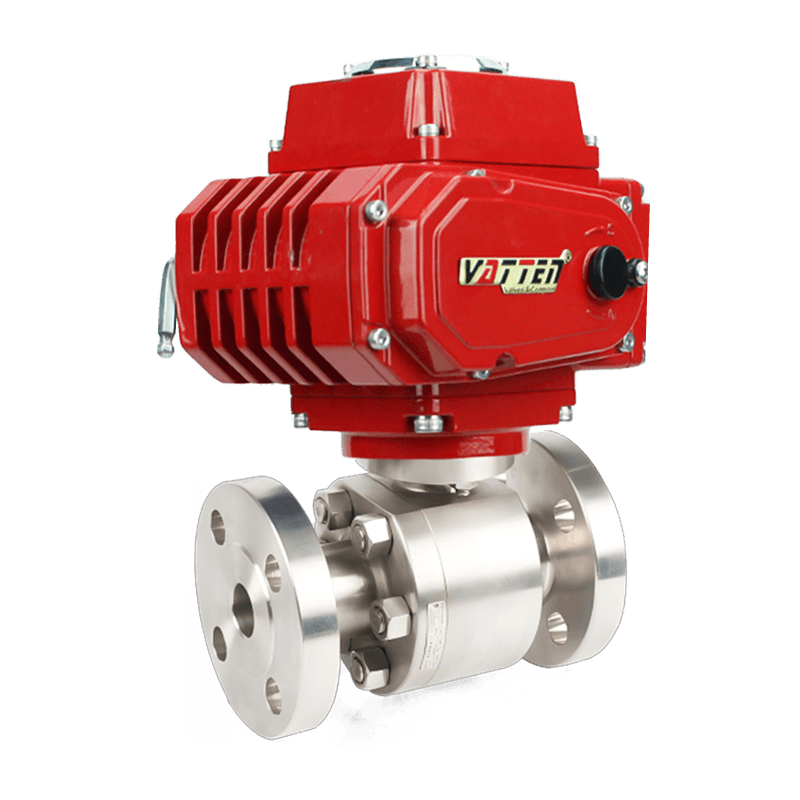 VATTEN Electric High-Pressure Ball Valve for Automated Flow ControlElectric high-pressure ball valve with switch or intelligent actuator options, POM seat, and WCB/SS304/SS316 body for automated pipeline flow control.View Product →
FAQ: Double Block and Bleed in Practice
Is a double block and bleed one valve or three?
Either is common. In small bore, a single body can carry two seats and a bleed port, and that is what instrument root valves usually look like. Above roughly 3 in., two separate valves with a spool between them is the more serviceable arrangement.
What is the difference between DBB and DIB?
DBB has two blocks and one vented cavity and isolates in one direction. DIB has two blocks with a vent on each side and seals in both directions, so it is specified where pressure can arrive from either side of the isolation point.
When is double block and bleed required?
It is standard practice wherever a line must be positively isolated without a physical blind: pressure relief valve isolation, instrument root valves, sampling points, pump headers, and flare or drain lines. Many operators also require it under process safety management rules when a hazardous medium is involved.
Can double block and bleed be used on liquid service?
Yes, provided cavity relief is designed in. Trapped liquid expands as the line heats up, and without a self-relieving seat the cavity pressure can exceed the seat rating. Confirm vent direction and relief behaviour with the supplier before ordering.