 English
 Deutsch
 Indonesia


Content
- 1 What ASME B16.34 Covers, and What It Leaves to Other Standards
- 2 Pressure-Temperature Ratings Are the Heart of the Standard
- 3 Material Groups: Why "WCB" Alone Is Not a Specification
- 4 Standard Class, Special Class, and Limited Class
- 5 Testing, Marking, and What to Demand on Paper
- 6 A Procurement Checklist Anchored to B16.34
A purchase order that reads "6 in. Class 300 ball valve, ASTM A216 WCB body, flanged ends" is incomplete until ASME B16.34 sits behind it. The standard, not the datasheet, determines how much pressure that valve may hold at 650 °F, how thick its wall must be, what the hydrostatic test pressure will be, and what has to be cast or stamped on the body. For flanged, threaded, and welding-end steel valves, B16.34 is the document that converts a class number into enforceable limits. Buyers who accept a class rating without checking its pressure-temperature tables are absorbing risk that nobody quoted for.
What ASME B16.34 Covers, and What It Leaves to Other Standards
ASME B16.34, titled Valves - Flanged, Threaded, and Welding End, is published by the American Society of Mechanical Engineers and revised periodically; the 2025 edition is the current one. Its scope covers steel valves, meaning carbon steel, alloy steel, and stainless steel bodies, in pressure Classes 150 through 4500, across gate, globe, check, ball, plug, and butterfly designs, provided the end connections are flanged, threaded, or welded.
The standard defines the things that matter most in day-to-day procurement: pressure-temperature ratings, pressure-boundary material requirements, minimum wall thickness, nondestructive examination rules, hydrostatic and seat testing, and marking. It deliberately does not duplicate other documents. Flange dimensions come from ASME B16.5, face-to-face and end-to-end lengths from ASME B16.10, and butt-weld end preparation from ASME B16.25. A complete valve specification cites B16.34 alongside those standards rather than instead of them.
How It Differs from API 600 and API 6D
B16.34 is a general-purpose pressure-boundary standard. API 600 covers bolted-bonnet steel gate valves with heavier wall allowances for severe refinery service, and API 6D covers pipeline valves with additional requirements such as double-block-and-bleed capability. A typical petrochemical specification invokes B16.34 for process valves and switches to the API documents only where their extra demands are justified.
Pressure-Temperature Ratings Are the Heart of the Standard
Every rating in B16.34 comes from a two-dimensional lookup: a material group on one axis, a pressure class on the other. The result is the maximum allowable working pressure at a given temperature, and it falls as temperature rises.
The derating is not subtle. A Group 1.1 carbon steel valve, built from an ASTM A216 WCB casting or A105 forging, in Class 300 may hold 740 psig at 100 °F but only 535 psig at 650 °F, a 28% reduction with no change to the valve itself. The same pattern holds across every class:
| Pressure class | At 100 °F | At 400 °F | At 650 °F |
|---|---|---|---|
| Class 150 | 285 | 200 | 125 |
| Class 300 | 740 | 635 | 535 |
| Class 600 | 1,480 | 1,270 | 1,075 |
Two practical notes follow from these tables. First, the top row of every B16.34 rating table reads -20 °F to 100 °F. The metric conversion to about -29 °C confuses many readers, but the intent is simple: within that band the 100 °F rating applies, and below -20 °F the standard pushes you toward impact-tested low-temperature materials such as LCB or LCC. Second, material notes cap service temperatures; WCB is permitted but not recommended for prolonged use above roughly 427 °C (800 °F), which is why steam plants step up to chrome-moly bodies such as WC6 or WC9 at elevated temperatures.
This is where the rating sheet meets the actuated valve. When a high-temperature line needs automated shut-off, the body rating, the seat material, and the actuator's temperature tolerance all have to clear the same process condition, not just one of them; a 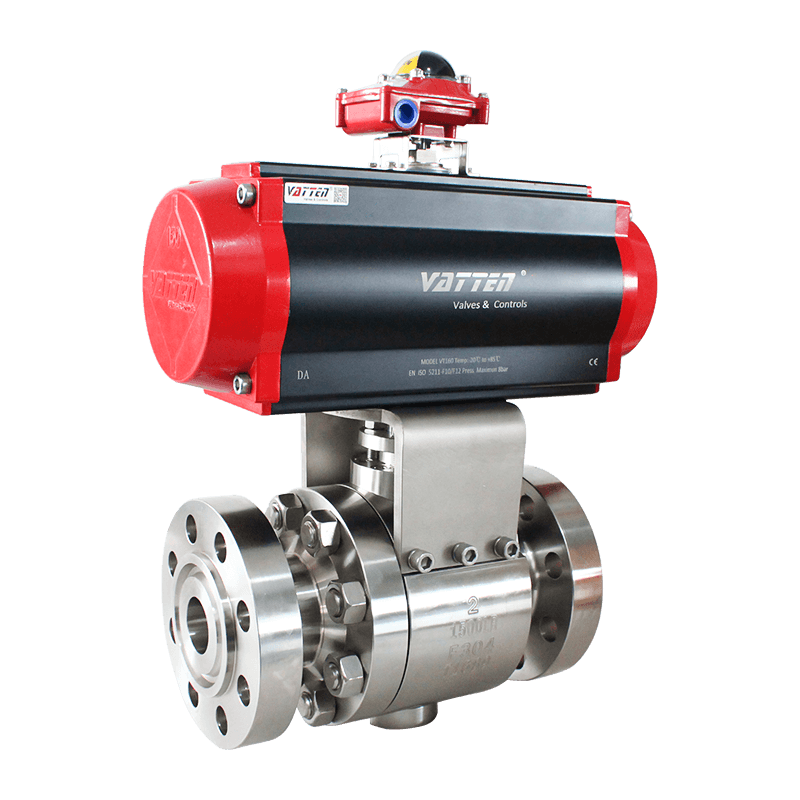 Pneumatic High-Temperature Ball ValveAn extended-body pneumatic ball valve with heat dissipation that shields the aluminum actuator from hot media, relevant where automated shut-off must clear the same high-temperature rating as the body and seat.View Product → is only as compliant as the weakest of those three.
Material Groups: Why "WCB" Alone Is Not a Specification
B16.34 groups body materials by chemistry and strength, and each group carries its own rating tables. Group 1.1 covers the workhorses, A105 forgings and WCB castings. Group 1.9 and Group 1.10 cover WC6 and WC9 chrome-moly steels for high-temperature steam. Group 2.1 covers CF8M, the cast equivalent of 316 stainless. Writing "carbon steel body" in a specification instead of the ASTM designation leaves room for substitutions the buyer never approved.
Trim, meaning stem, disc, seat, and internal seating surfaces, is designated separately from the body, and the combination drives both performance and price. A WCB body with 316 trim is a common, economical pairing for water and steam service; a full 316 body suits corrosive duties. The choice usually comes down to chloride content, temperature, and cost, and getting it wrong shows up as pitting or galling in the first maintenance cycle rather than at the factory test bench. If body material is the open question in your project, it is worth reviewing how carbon steel and stainless steel stop valves differ before locking in a group. For engineers consolidating on carbon steel, a 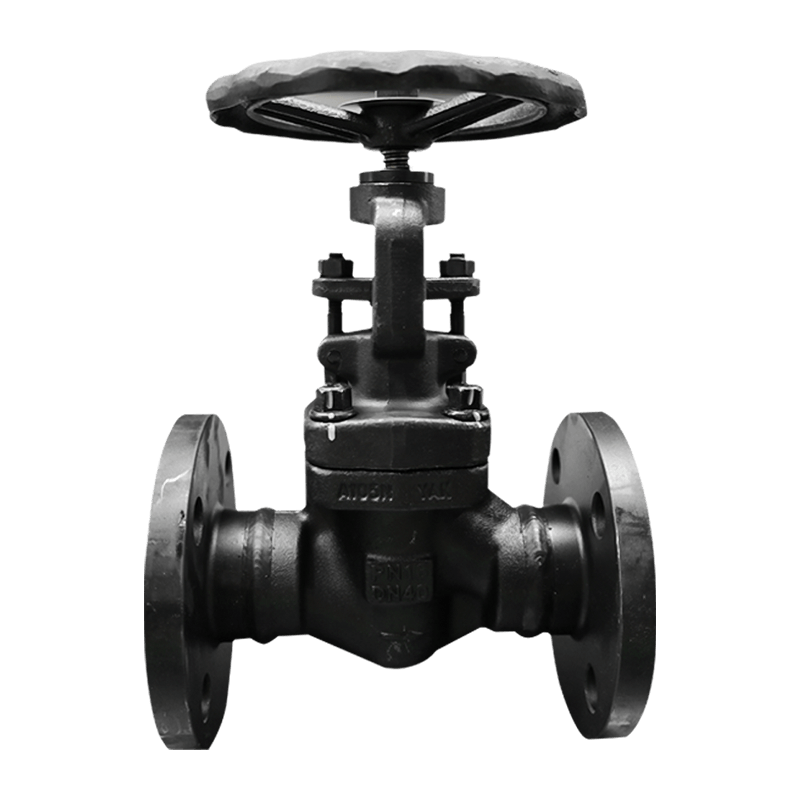 Manual Carbon Steel Globe ValveA handwheel globe valve in Group 1.1 carbon steel with flat or conical sealing options, illustrating how a WCB body pairs with designated trim for throttling and shut-off in water and steam service.View Product → illustrates how a Group 1.1 body is paired with a designated trim set on a standard throttling and shut-off design.
Standard Class, Special Class, and Limited Class
B16.34 publishes two sets of ratings for most materials. Standard Class ratings apply to valves produced with conventional foundry inspection. Special Class ratings are higher at the same temperature, often noticeably so at elevated service temperatures, but only because every pressure-retaining casting must undergo full nondestructive examination: radiographic or ultrasonic testing of the shell plus surface examination, judged against acceptance criteria written into the standard.
The distinction is an engineering trade, not a marketing tier. Special Class does not give you stronger metal; it gives you a higher rating in exchange for verified casting integrity and, in practice, longer lead times and higher cost. Limited Class fills the space between the two for specific, restricted applications. For general process duty, Standard Class is the rational default; Special Class earns its keep in high-pressure hydrocarbon service where the weight savings of a sounder casting justify the examination program.
Testing, Marking, and What to Demand on Paper
Standard Class valves leave the factory after a hydrostatic shell test at 1.5 times the rated pressure referenced to 100 °F, and a seat test at 1.1 times the rating, with a low-pressure air seat test available where trapped test liquid is unacceptable. Special Class valves are proven at their higher special ratings. Automated valves in the upper classes carry the same obligations, so an 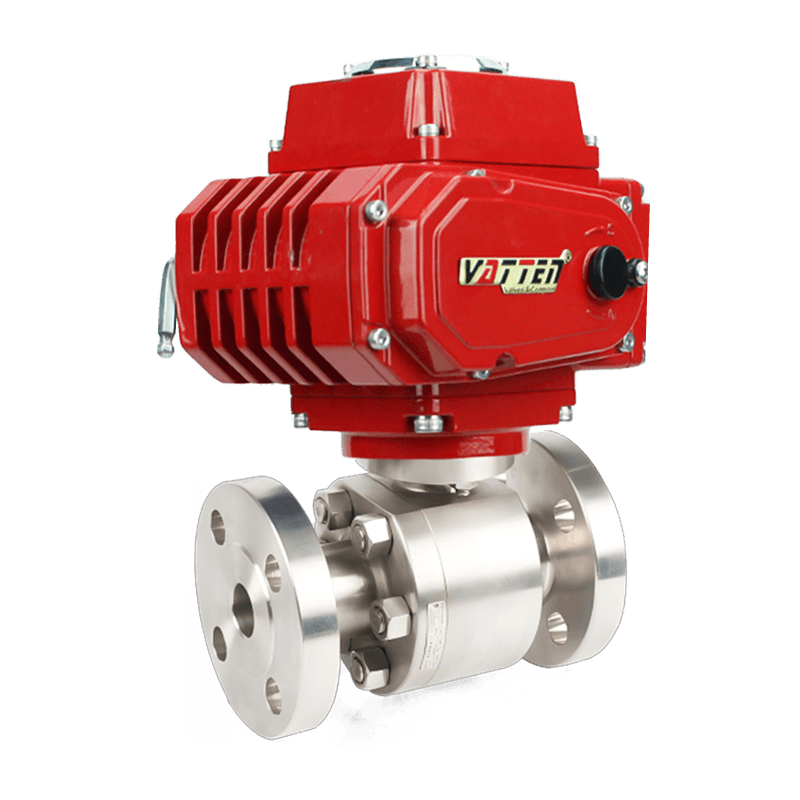 Electric High-Pressure Ball ValveAvailable in WCB or SS304 with switch-type or intelligent electric actuators, this ball valve must pass its class shell test while the actuator is sized for full differential pressure.View Product → must clear the shell proof at its class and still have an actuator sized to seat and unseat against full differential pressure.
Marking follows MSS SP-25: the manufacturer's identification, nominal size, pressure class, and body material appear on the valve, and trim materials are identified on the nameplate or in the accompanying documentation. Special Class valves carry the B16.34 designation explicitly, so an inspector can tell from the body which examination program the casting went through.
Paperwork matters as much as pressure gauges here. A Class 2500 valve that arrives without material test reports and recorded test pressures is a Class 2500 valve only on its nameplate.
A Procurement Checklist Anchored to B16.34
Closing the gap between a datasheet and a compliant valve comes down to a short list:
- State the design temperature and pressure, and require the vendor to confirm the rating at temperature, not only at ambient.
- Name the ASTM specification and material group for the body, for example A216 WCB in Group 1.1, and designate trim separately.
- Declare Standard or Special Class explicitly so the examination program is fixed before the order is placed.
- Tie end connections to B16.5 or B16.25 and face-to-face dimensions to B16.10 so the valve fits the piping without field rework.
- Require SP-25-compliant marking, material test reports, and recorded shell and seat test pressures with each shipment.
- Cite the current edition, 2025, in the specification so both parties work from the same acceptance tables.
None of these steps adds cost when it is written down. Every one of them becomes expensive when it is discovered after delivery.
B16.34 exists so that a class number means the same thing to the foundry in one country, the actuation integrator in another, and the plant inspector who signs off the installation. That shared language is why automated valve packages, pneumatic and electric ball, butterfly, globe, and gate valves configured to a stated class and material group, can be procured across borders with confidence. Treat the standard as the contract behind the contract, and open the pressure-temperature tables first, not last.