 English
 Deutsch
 Indonesia


Content
- 1 What Is a Manual Wafer Butterfly Valve?
- 2 Working Principle of a Manual Wafer Butterfly Valve
- 3 Types of Manual Wafer Butterfly Valves
- 4 Key Differences: Wafer vs Lug vs Flanged
- 5 Installation Guidelines for Manual Wafer Butterfly Valves
- 6 How to Select the Right Manual Wafer Butterfly Valve
- 7 Common Applications
- 8 Maintenance and Troubleshooting Tips
What Is a Manual Wafer Butterfly Valve?
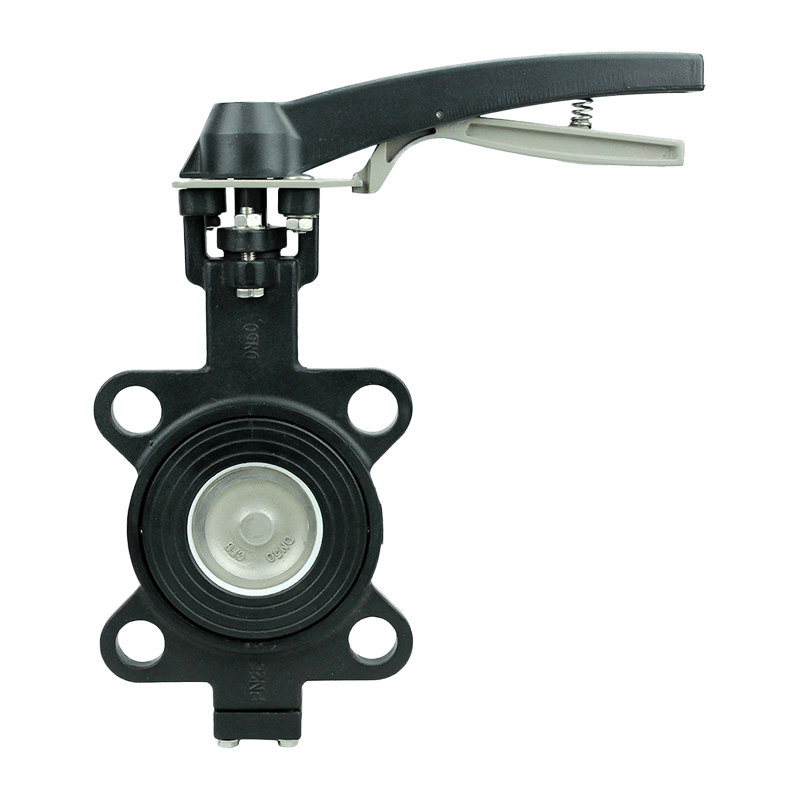
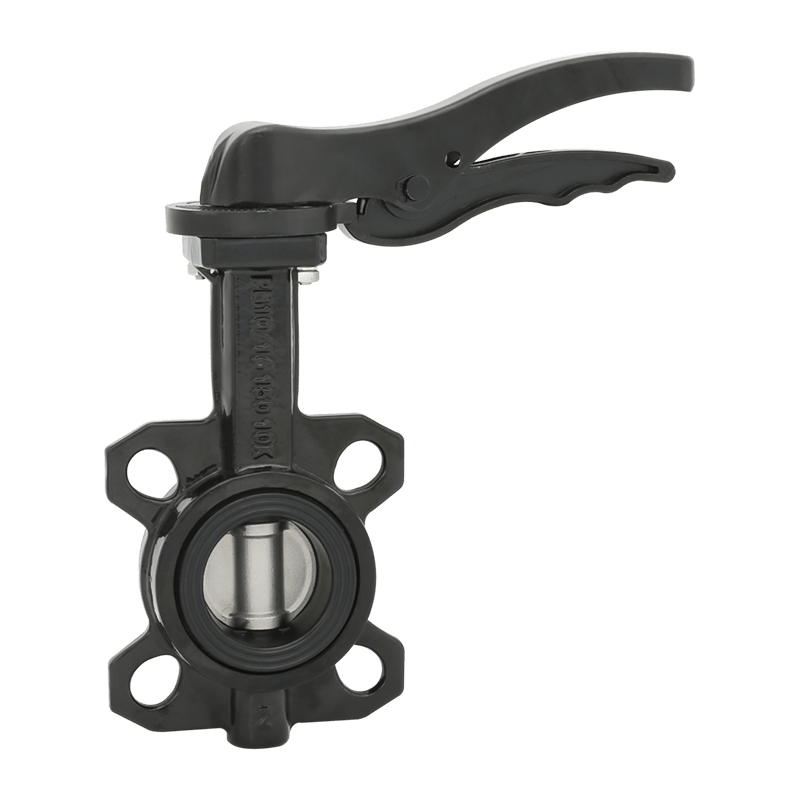
A manual wafer butterfly valve is a quarter-turn shut-off valve that sandwiches between two pipe flanges, eliminating the need for separate body flanges. Its slim profile saves up to 70% of the axial space required by a comparable flanged gate valve, making it a natural fit in compact skids, rooftop cooling lines, and shipboard piping. When you specify a wafer body, the valve relies on the mating pipeline flanges for alignment and sealing: the disc rotates 90° from fully open to fully closed, controlled by a hand lever or a gearbox mounted directly on the top flange.
Understanding where this design fits requires a clear butterfly valve components and types guide. Within that family, the manual wafer variant stands out because it omits motorized actuation, keeping upfront cost low and maintenance straightforward. The Vatten manual wafer butterfly valve (double eccentric design) illustrates how even high-cycle services can benefit from a lightweight wafer body without sacrificing long-term sealing reliability.
 Manual Butterfly ValveVATTTEN manual butte...View Product →
Working Principle of a Manual Wafer Butterfly Valve
Torque applied to the handle or gearbox rotates the stem and disc together. In the fully open position the disc edges align with the flow, minimizing pressure loss. Closing the valve rotates the disc 90° until its perimeter contacts the seat, cutting off flow. The entire operating cycle takes less than a second on smaller hand-lever valves and a few seconds on larger gear-operated units.
The disc-to-seat interface defines leak-tightness. Resilient-seated (concentric) designs rely on the disc compressing a rubber or PTFE liner; metal-seated offset designs use camming motion and pressure-assist to achieve shut-off. Because hand-lever models can develop high rim pull forces above DN 200, many installations switch to a gearbox that multiplies input torque. This is why gear-operated wafer butterfly valves are standard in water mains and light slurry lines where an electric actuator would be overkill. If you need to compare drive options, the manual vs automated butterfly valve comparison breaks down torque ranges, speed, and cost trade-offs in detail.
Types of Manual Wafer Butterfly Valves
Concentric (Resilient-Seated)
The stem passes through the center of the disc and the soft seat. Concentric manual wafer valves are the most economical choice for water, neutral chemicals, and compressed air up to 200 °C, where the liner material can handle the media. A standard EPDM-lined valve can operate at 150 PSI and is not suited for jet fuel or strong solvents. Nitrile and Viton liners broaden chemical compatibility, while PTFE-lined resilient seats handle a wider pH range but demand higher seating torques.
Double Offset & Triple Offset
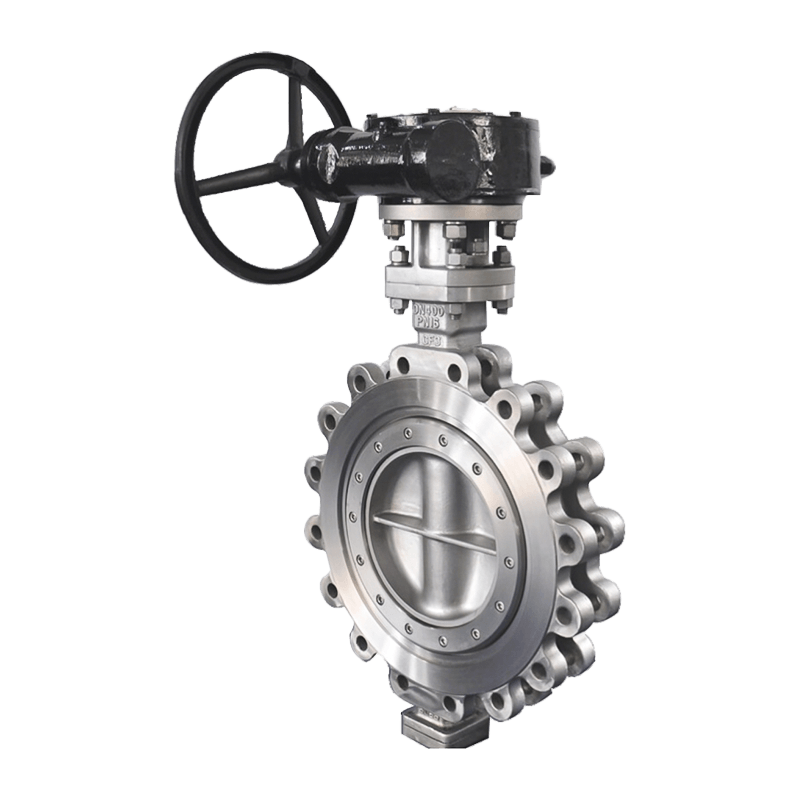
Offset geometries move the shaft away from the disc centerline (first offset) and from the sealing surface plane (second offset), reducing wear during the opening and closing stroke. Double offset manual wafer valves with soft-in-metal seats are common in heating systems and district cooling. Triple offset versions add a conical seat that eliminates rubbing altogether, achieving bubble-tight metal-to-metal sealing. Specify a triple offset wafer design when you need fire-safe certification or zero leakage in hydrocarbon service. A typical application is fuel skids where the valve must pass API 607 and remain tight after a burnout.
Both double and triple offset configurations are available as manual wafer units. For severe abrasive media, the manual hard-seal butterfly valve pairs a hardened disc with a laminated seat to withstand fly ash and catalyst fines without jamming.
 Manual Butterfly ValveVATTTEN manual butte...View Product →
Key Differences: Wafer vs Lug vs Flanged
Selecting a wafer body over lug or flanged alternatives is a decision driven by installation priorities, not just cost. The table below captures the critical differentiators that affect piping layout and maintenance planning.
| Feature | Wafer | Lug | Flanged |
|---|---|---|---|
| Mounting | Clamped between flanges | Bolted to each flange with threaded inserts | Has integral flanges |
| Dead-end service | Not possible | Yes | Yes |
| Weight (DN 150) | Lightest | Moderate | Heaviest |
| Centering | Relies on flange bolts | Self-centering lugs | Flange mates |
The wafer design keeps material weight and bolt count low, but it cannot serve as an isolation point for downstream piping removal. When you expect periodic maintenance disassembly on one side, a lug body is the safer choice. For routine in-line isolation with full pipe support on both flanges, the manual wafer valve remains the most installation-friendly option. Explore the manual butterfly valve product range to see how these body styles map to specific size and pressure classes.
 Manual Butterfly ValveVATTTEN manual butte...View Product →
Installation Guidelines for Manual Wafer Butterfly Valves
A correct wafer install depends on three mechanical details that are often overlooked but directly cause flange leakage.
- Stud bolt length: The bolt must pass through both flanges and the valve body with enough thread engagement. Undersized studs fail to compress the gasket fully; oversized studs bottom out and prevent uniform load.
- Disc position during bolt tightening: The disc must be partially open (roughly 10°) so it does not interfere with the seat while flanges are drawn together. Tightening bolts with the disc fully closed can pinch and cut the liner.
- Gasket strategy: Wafer butterfly valves typically use the resilient liner as the primary seal, eliminating extra gaskets. Where dual gaskets are specified because of customer standards, ensure the combined stack height does not exceed the valve’s face-to-face dimension, or the liner may over-compress.
After bolting, cycle the lever or gearbox through full travel. Any stiffness at the 90° stops suggests the disc is rubbing an uneven flange face. Adjust bolt torque in a star pattern before declaring the valve defective. Always check the pressure class stamped on the body neck — wafer valves are available from ANSI 150 up to 300 class in carbon and stainless steel.
How to Select the Right Manual Wafer Butterfly Valve
Material Selection: Body, Disc, Seat
Start with the wetted parts. A cast iron body with an epoxy coating works for cooling water; 316 stainless steel is required for chlorinated water or food contact. The disc should match or exceed the body’s corrosion resistance. EPDM seats cover most municipal water services, while PTFE-lined seats extend into strong acids. For abrasive flows, a stainless steel manual wafer valve with Stellite-faced disc edges extends service intervals significantly.
Pressure & Temperature Ratings
At the selection stage, ask for the specific pressure/temperature curve of the seat material, not just the valve’s rating. An EPDM seat rated 150 PSI at 50 °C may drop to 90 PSI at 110 °C. When temperature cycles are wide, a metal-seated triple offset design eliminates seat derating altogether.
Actuator Torque Requirements
Hand levers are practical under DN 200 where breakaway torque stays below 35 N·m. Above that, a gearbox (worm gear or bevel gear) is advisable. Calculate torque using differential pressure, seat friction, bearing friction, and a 30% safety factor. A correctly sized gearbox with a position indicator prevents inadvertent over-torquing of the stem. For larger diameters or high-cycling lines, consider converting to an automated solution; however, many plants retain manual override gearboxes as a fallback.
The manual butterfly valve catalog provides ready-to-order configurations across lug and wafer bodies, so you can confirm face-to-face dimensions and available materials in a single datasheet.
Manual Butterfly ValveVATTTEN manual butte...View Product →Common Applications
Manual wafer butterfly valves are workhorses in packaged equipment and utility loops:
- Water and wastewater: Raw water intake, filter backwash lines, sludge transfer.
- HVAC: Chilled water isolation, condenser water headers, geothermal loops.
- Chemical processing: Day tanks, dosing skids, and acid transfer where full PTFE lining is combined with a wafer body.
- Food and beverage: Sanitary clamp-wafer hybrids for CIP-able lines, though specific tri-clamp bodies may be preferred.
- Marine and offshore: Ballast and firewater systems benefit from the weight savings of wafer valves.
Because the wafer design does not permit single-flange dead-end service, avoid using it for tank nozzles where the downstream flange must be removed while the tank remains full.
Maintenance and Troubleshooting Tips
Most premature failures on manual wafer butterfly valves trace back to seat distortion, stem packing leaks, or incorrect storage. Observe these practices to extend service life:
- Cycle regularly: Valves held in one position for months allow liner set. Operate each valve quarterly to redistribute seat compression.
- Stem leak remedy: Replace the top packing ring and gland before the corrosion spreads to the stem. A periodic torque check of the gland bolts prevents over-compression, which increases operating torque.
- Seat inspection: A visible score line on the liner at the disc edge indicates foreign particle entrapment — flush the line and exercise the valve. Deep cuts require seat replacement, a task that demands full line depressurization and wafer removal.
- Gearbox lubrication: Open the gearbox housing every 1000 cycles in dry environments. Low grease causes backlash and uneven disc travel.
When a manual wafer butterfly valve becomes difficult to operate, first verify that pipe supports have not shifted, imposing flange misalignment. Straight-pipe runs either side should be at least two pipe diameters long to prevent uneven loading on the liner.