 English
 Deutsch
 Indonesia


Content
- 1 How a Pneumatic Ball Valve Works
- 2 Key Performance Specs That Actually Matter
- 3 Types of Pneumatic Ball Valves and When to Use Each
- 4 Pneumatic vs. Electric Ball Valve: Which to Choose
- 5 Essential Accessories for a Functional Pneumatic System
- 6 Installation and Maintenance Checklist
- 7 Industry Applications at a Glance
- 8 Selecting the Right Pneumatic Ball Valve: A Practical Summary
A pneumatic ball valve can complete a full open-to-close cycle in under a second. That speed — combined with zero manual input — is exactly why engineers reach for this type of valve when designing automated fluid control systems. Whether you're managing water treatment flows, chemical dosing lines, or high-frequency packaging processes, the ability to switch on demand without human intervention changes what's operationally possible.
How a Pneumatic Ball Valve Works
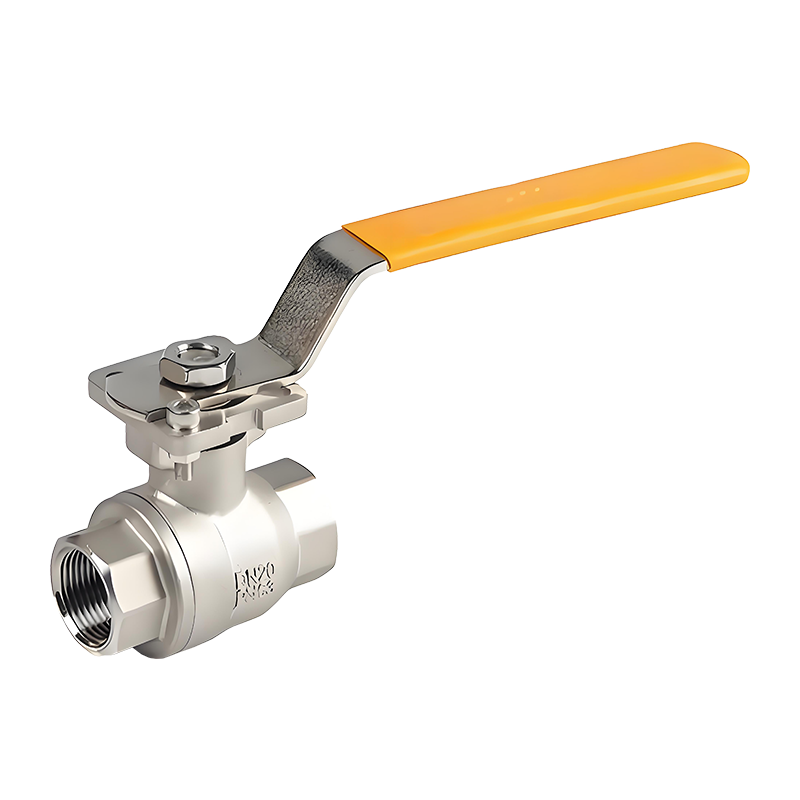
At its core, a pneumatic ball valve pairs two components: a ball valve body and a pneumatic actuator. The ball itself contains a bore through its center. When the actuator rotates it 90 degrees, that bore aligns with the pipeline and fluid flows; rotate it back, and flow is completely blocked. The actuator drives this motion using compressed air — no electricity at the valve body, no manual effort required.
Actuators come in two main configurations. A single-acting (spring-return) actuator uses compressed air to move in one direction and a spring to return — useful for fail-safe applications where you need the valve to default to a known position if air supply is lost. A double-acting actuator uses compressed air in both directions, delivering faster cycle speeds and greater torque, making it the standard choice for high-frequency automation lines.
Both mount to the valve body via an ISO 5211 standard flange — flange sizes F03, F04, F05 and beyond — which means actuators and valve bodies from compliant manufacturers are interchangeable without custom machining.
Key Performance Specs That Actually Matter
Datasheets can be dense. These are the numbers engineers should actually verify before specifying a pneumatic ball valve:
| Parameter | What to Look For | Why It Matters |
|---|---|---|
| Actuator cycle life | ≥ 1,000,000 cycles | Determines maintenance frequency in high-speed lines |
| Valve body cycle life | ≥ 800,000 cycles | Seating wear determines leak-tightness over time |
| Actuator body material | Reinforced aluminum alloy | Weight savings without sacrificing structural rigidity |
| Gear material | Stainless steel internal gears | Corrosion resistance and torque transmission stability |
| Cylinder treatment | Anodic hardening | Oxidation and corrosion resistance in humid environments |
| Seat seal material | PTFE or EPDM | Chemical compatibility and temperature range |
| Flange standard | ISO 5211 | Actuator interchangeability without custom adapters |
For example, Vatten's pneumatic ball valve series uses a reinforced aluminum alloy actuator body with stainless steel gears, dual pistons rated for high wear resistance, and an anodically hardened cylinder — all contributing to a rated actuator life of 1,000,000 cycles and a valve body life of 800,000 cycles. The ball is cast from high-platform silica sol material, giving a smooth, pit-free surface that maintains tight shutoff over the full service life.
Types of Pneumatic Ball Valves and When to Use Each
Not all pneumatic ball valves are interchangeable. The right type depends on media, pressure rating, connection method, and flow direction requirements.
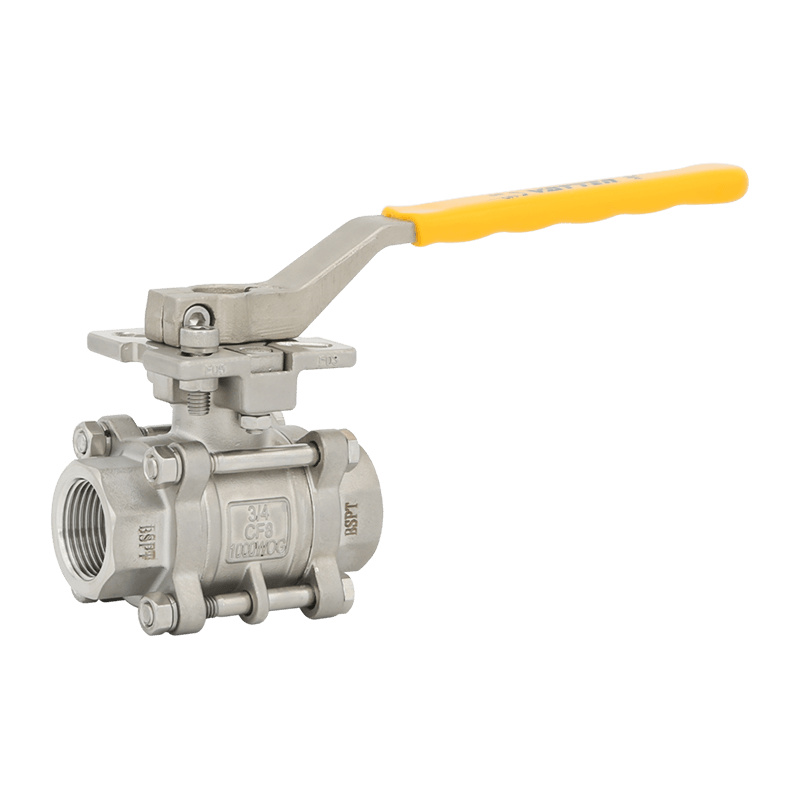
- Threaded (three-piece) ball valve — Easy to disassemble and clean without removing from the pipeline. Preferred in food, beverage, and pharmaceutical applications where regular inspection is mandatory. See: pneumatic three-piece threaded configuration.
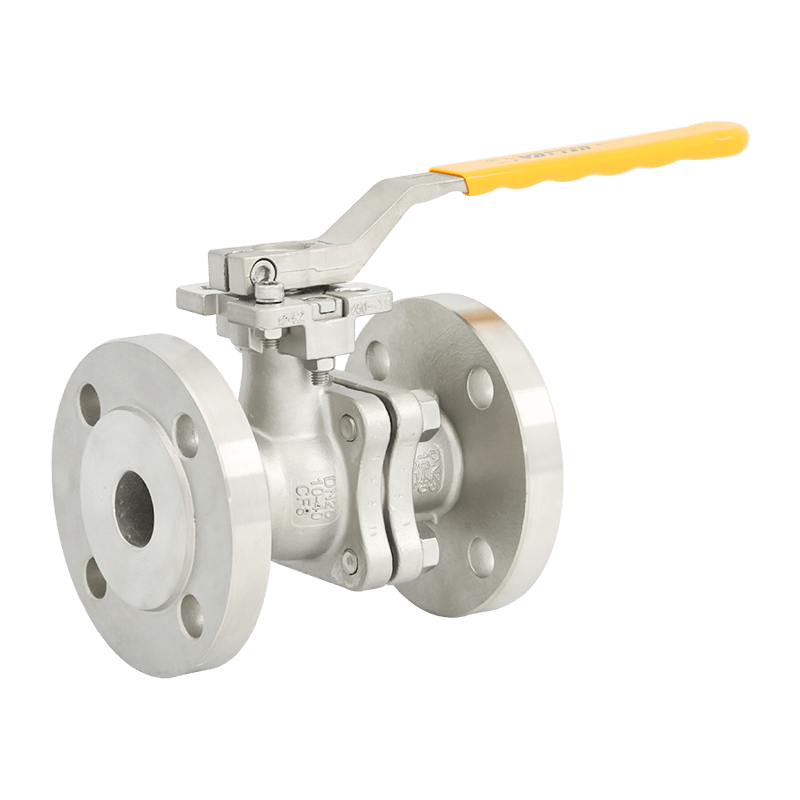
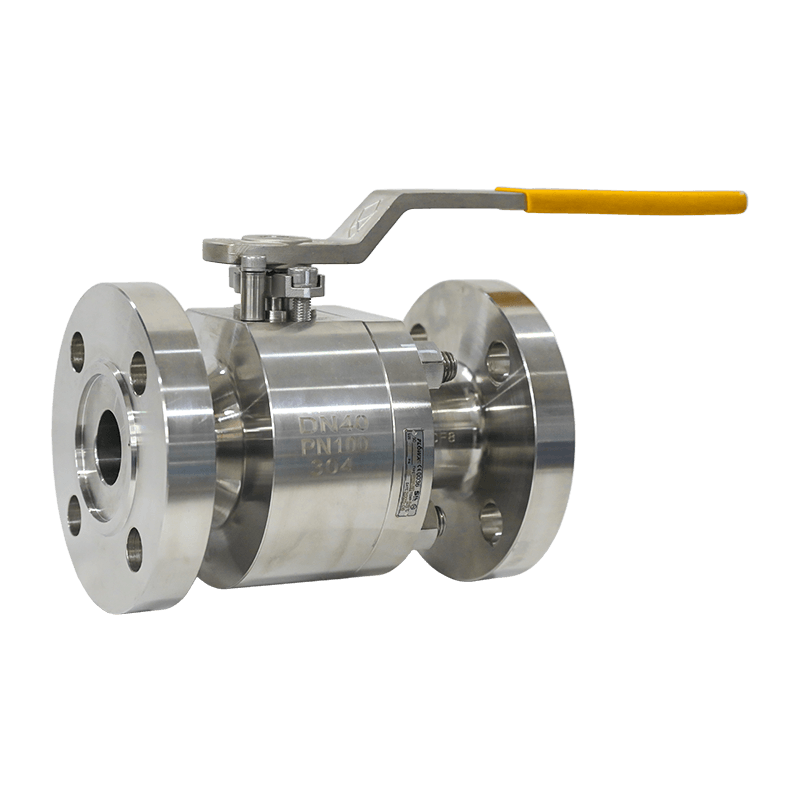
- Flanged ball valve — The standard for larger pipe diameters and higher pressures. Flanged connections distribute stress evenly and are easy to bolt in or replace. Available in stainless steel and carbon steel flanged variants depending on corrosion requirements.
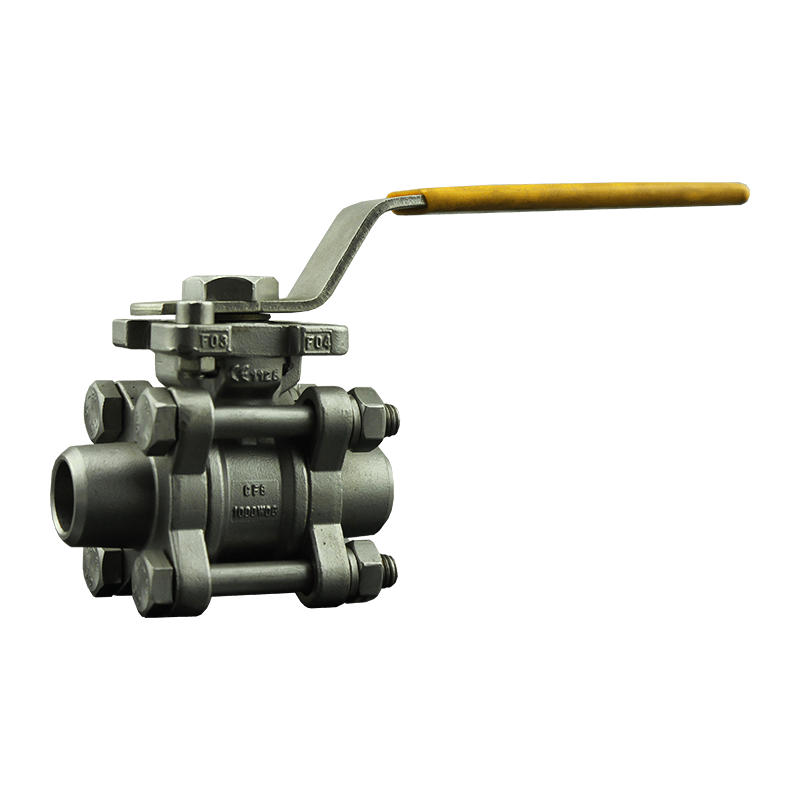
- Welding ball valve — Used where zero leakage risk from connection joints is essential, such as high-pressure gas lines. The valve body welds directly into the pipeline.
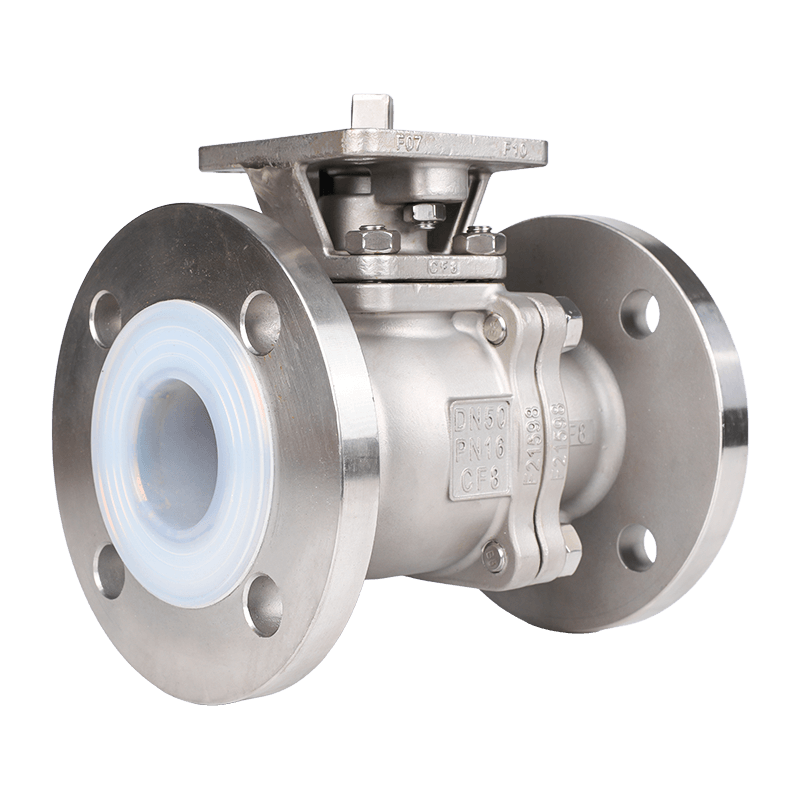
- Fluorine-lined (PTFE-lined) ball valve — Required for strong acids, alkalis, and aggressive solvents. The PTFE lining protects both the valve body and the process media from contamination.
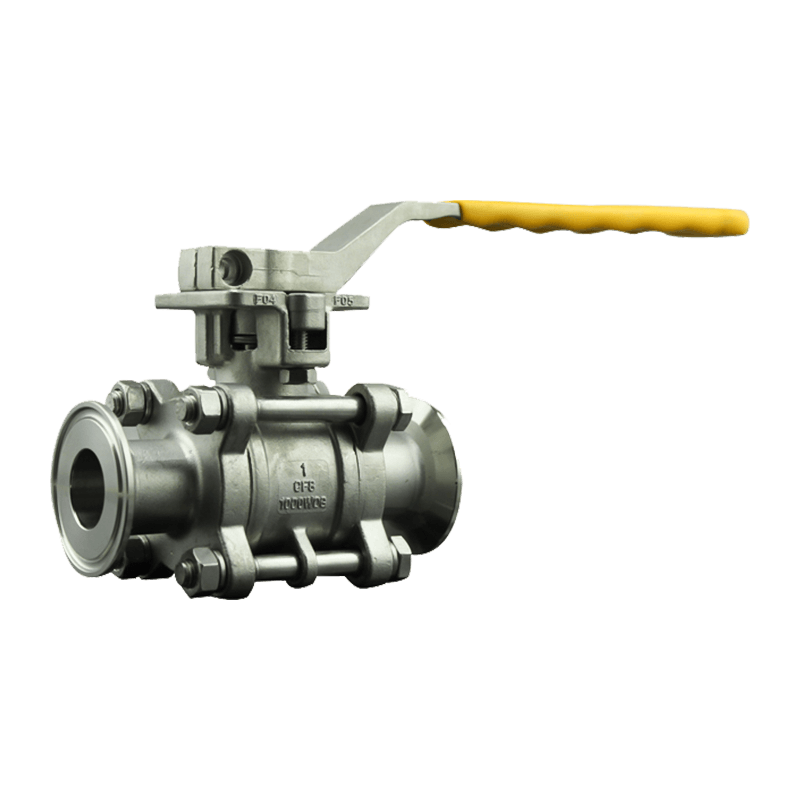
- Clamp ball valve — Sanitary-grade connection for hygienic industries. Fast assembly and disassembly with no tools required.
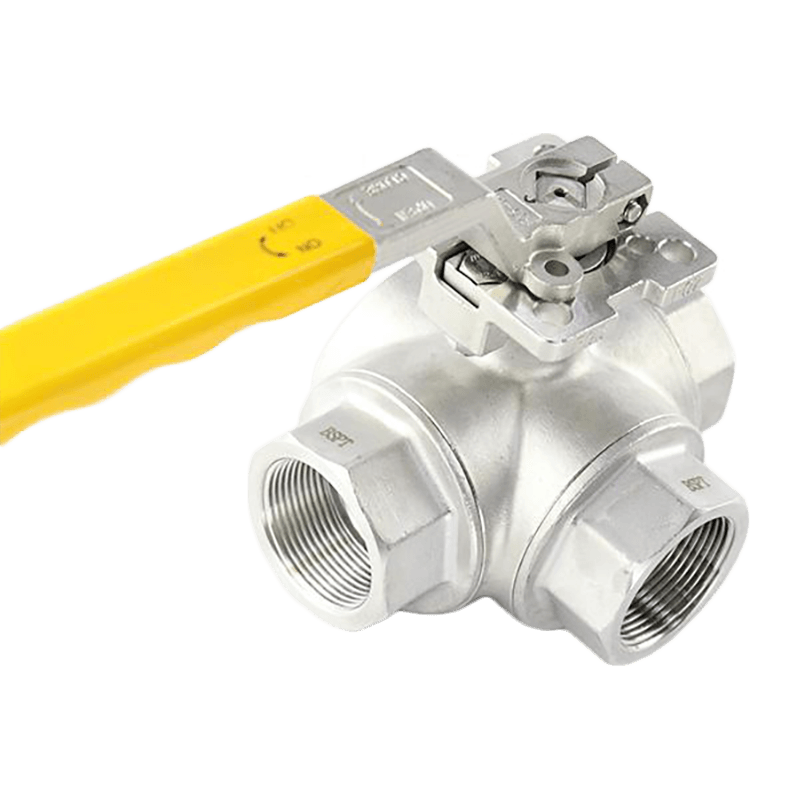
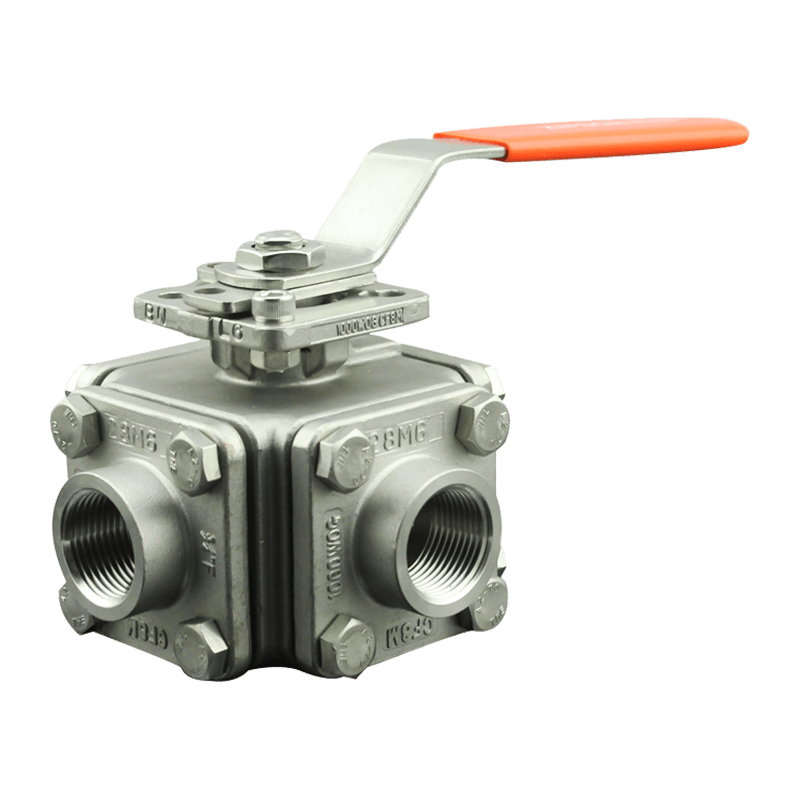
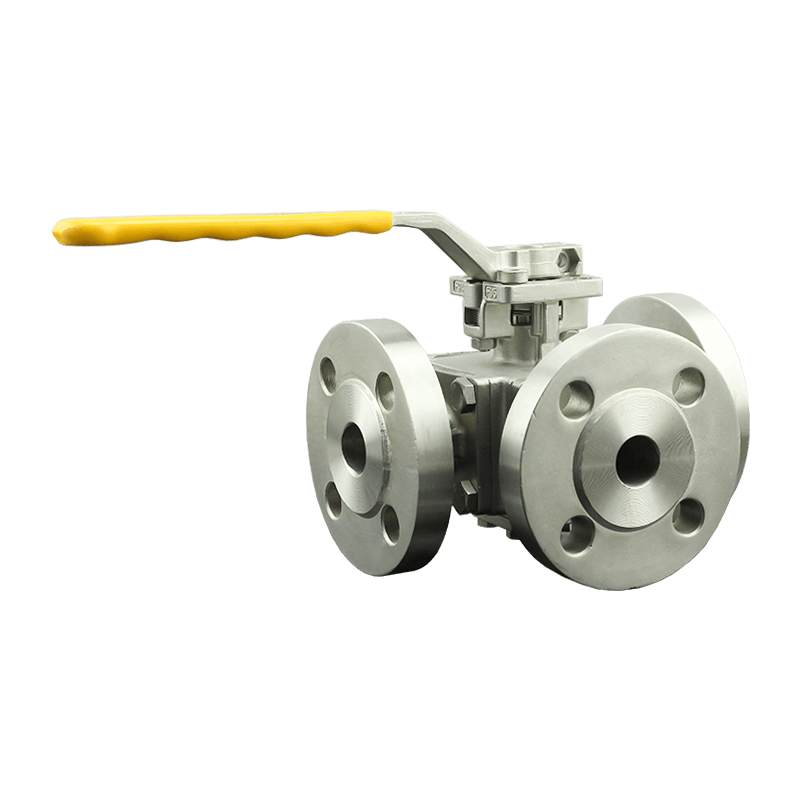
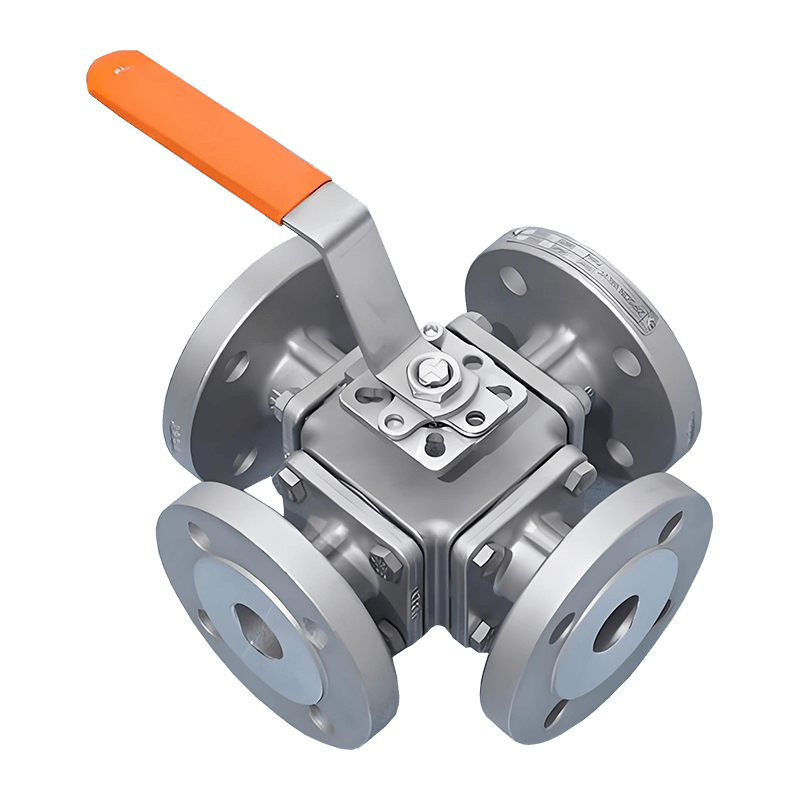
- Three-way and four-way ball valves — Used for flow diversion or mixing. A Y-type three-way pneumatic ball valve, for instance, can route flow between two outlet paths from a single actuated assembly.
- Explosion-proof flanged ball valve — Certified for use in hazardous areas where flammable gases or dust are present. The actuator housing meets Ex-rated enclosure standards.
Pneumatic vs. Electric Ball Valve: Which to Choose
The most common specification decision is whether to use a pneumatic or electric actuator. Each has clear strengths:
| Factor | Pneumatic | Electric |
|---|---|---|
| Speed | Very fast (< 1 second typical) | Slower (seconds to minutes) |
| Infrastructure | Requires compressed air supply | Requires electrical wiring only |
| Fail-safe | Spring-return option available | Requires battery backup for fail-safe |
| Cost at larger sizes | Lower | Higher |
| Hazardous areas | Naturally safe (no electrical spark risk) | Requires Ex-rated enclosure |
| Positioning precision | Good (with positioner) | Excellent (native feedback) |
Pneumatic actuators are the preferred choice whenever compressed air infrastructure already exists, response speed is critical, or the installation is in a potentially explosive environment. For remote locations without air supply or applications requiring very precise analog positioning, electric ball valves are the more practical option.
Essential Accessories for a Functional Pneumatic System
A pneumatic ball valve alone doesn't form a complete control system. Several accessories are typically required:
- Solenoid valve — Controls the direction of compressed air to the actuator. A 5/2-way solenoid valve is standard for double-acting actuators. The solenoid receives a 24V DC or 220V AC signal from the PLC or control panel. Browse direct-mount and pipe-connected solenoid valve options.
- Filter pressure reducing valve — Protects the actuator from particulate contamination and regulates supply pressure to the specified range (typically 0.4–0.7 MPa). Critical for extending actuator piston life.
- Valve limit switch — Provides open/closed position feedback to the control system. Without this, the PLC has no confirmation that the valve has actually moved. Available in standard and explosion-proof limit switch configurations.
- Valve positioner — Needed when the valve is used for proportional flow control rather than pure on/off switching. The positioner translates a 4–20 mA signal into exact actuator position, enabling accurate throttling.
Installation and Maintenance Checklist
Most pneumatic ball valve failures trace back to installation errors or skipped maintenance steps. Follow this checklist to avoid the most common problems:
- Verify flow direction — Standard two-way ball valves are bidirectional, but some V-port and three-way configurations are not. Check the arrow marking on the valve body before installation.
- Set air supply pressure correctly — Operating outside the rated pressure range (usually 0.4–0.7 MPa) is the primary cause of actuator wear and seal failure. Install a filter regulator upstream.
- Confirm ISO 5211 flange compatibility — Actuator and valve flange size must match. Mismatched flanges cause off-center torque transfer and accelerated stem wear.
- Check seat seal compatibility — PTFE seats are suitable for most fluids up to approximately 180°C. For high-temperature applications above this threshold, specify a metal-seated or high-temperature rated pneumatic ball valve.
- Inspect and lubricate at intervals — Even valves rated for 800,000+ cycles benefit from periodic inspection of seals and stem packing. The pressure cap design on quality valves allows this without pipeline disassembly.
Industry Applications at a Glance
Pneumatic ball valves appear in virtually every process industry. The specific variant selected varies significantly by sector:
- Chemical processing — Fluorine-lined valves for corrosive media; explosion-proof actuators for flammable environments.
- Water treatment — Standard stainless steel flanged valves for on/off isolation; three-way variants for flow diversion between treatment stages.
- Pharmaceutical and food — Clamp-connected sanitary valves; three-piece threaded designs for CIP (clean-in-place) compatibility.
- Energy and petrochemical — High-pressure rated valves with carbon steel or alloy bodies; welding connections for permanent installations.
- Industrial automation — High-cycle double-acting actuators paired with limit switches and PLCs for fully automated production lines.
Selecting the Right Pneumatic Ball Valve: A Practical Summary
Matching the valve to the application comes down to five variables: media type (corrosive, viscous, high-purity?), temperature and pressure range, cycle frequency, connection standard, and fail-safe requirements. Once those are defined, the valve type, body material, seat material, actuator configuration, and required accessories follow logically.
Vatten's pneumatic ball valve lineup — spanning threaded, flanged, welded, fluorine-lined, clamp, three-way, four-way, explosion-proof, high-temperature, and high-pressure variants — is structured to cover this full selection matrix. Combined with a full range of valve accessories including solenoid valves, limit switches, positioners, and filter regulators, it's possible to source a complete, matched pneumatic control assembly from a single supplier — which significantly simplifies commissioning and long-term support.
For most industrial applications, a pneumatic ball valve remains the most cost-effective and reliable automated flow control solution available. The key is specifying the right type from the outset.