 English
 Deutsch
 Indonesia


Content
- 1 What a Pilot Operated Valve Is and Why It Exists
- 2 How the Pilot and Main Valve Work Together
- 3 Pilot Operated vs Spring Loaded: Where Each One Wins
- 4 Regulators, Back Pressure and the Numbers to Check
- 5 Pilot Operated Solenoid and Check Valves
- 6 What to Send Before You Ask for a Quote
- 7 Frequently Asked Questions
Two relief valves ordered with the same set pressure, the same inlet size and the same body material can behave completely differently on one header. One holds its disc shut with a spring; the other holds it shut with the process pressure itself, routed through a small pilot. That difference decides the operating margin you can keep, the way the valve reacts to back pressure, and the mass you lift during a turnaround.
The notes below are written from a selection and troubleshooting angle, covering safety relief valves, self-operated regulators and pilot operated solenoid valves.
What a Pilot Operated Valve Is and Why It Exists
A pilot operated valve is a two-stage device in which a small pilot senses pressure or receives a signal, and the resulting change in a control chamber lets a much larger main valve open or close.
The main valve does the work without having to be strong. In a spring loaded relief valve the spring pushes back against system pressure acting on the full seat area, so doubling seat diameter roughly quadruples the required spring force and the valve grows a tall bonnet and a heavy body. In a pilot operated design the disc is held shut by pressure trapped in a dome above it. Because the dome acts on a larger area than the seat, a modest dome pressure creates a large closing force, and the pilot spring only moves a light sensing element.
A pilot operated valve is a valve whose opening or closing is triggered by a small pilot element and carried out by a larger main element, with the pilot controlling the pressure in a chamber instead of lifting the main disc directly.
At 100 bar and above, or at large orifice sizes, a pilot operated relief valve can weigh a fraction of a spring loaded equivalent and be handled without a crane. That changes support steel, nozzle loads and turnaround logistics, not only the purchase price.
How the Pilot and Main Valve Work Together
The sequence below applies to most pilot operated relief valves; only the pilot internals differ between pop action and modulating designs.
Inlet pressure passes a small restrictor into the dome. Dome pressure acts on a larger area than the seat, so the net force keeps the disc firmly closed well below set pressure.
The pilot sensing element, usually a piston or a diaphragm, starts to move. No flow passes the main seat yet, but the pilot is already reacting to the pressure signal.
The pilot vents the dome faster than the restrictor can refill it. Dome pressure collapses, inlet pressure lifts the disc, and the valve relieves. Capacity depends on the main orifice, not on the pilot.
As pressure falls, the pilot closes and re-pressurizes the dome. The gap between opening and reseating pressure is the blowdown, and on pilot operated designs it is usually smaller than on a conventional spring loaded valve.
The dome restrictor is a drilled part a few millimetres across, and it sets opening speed. If it clogs with dirt, wax or hydrate the dome cannot vent and the valve stays shut far above set pressure. If somebody drills it oversize during a repair, the valve chatters. Treat it as a critical spare, not as a hole.
Pop action opens close to fully once set pressure is reached. Modulating pilots open in proportion to overpressure and are usually chosen for compressible service, where a sudden full lift would create noise and piping vibration.
Pilot Operated vs Spring Loaded: Where Each One Wins
Pilot operated designs win on operating margin, weight and back pressure tolerance; spring loaded designs win on dirty service and mechanical simplicity.
Choose pilot operated when
- You must run at 93 to 95 percent of set pressure without simmering.
- The valve is large, the pressure high, or nozzle loads are tight.
- Discharge feeds a common header with superimposed back pressure.
- Remote sensing or a lift indicator is required.
Choose spring loaded when
- The medium is dirty, sticky or prone to polymerise.
- Site maintenance prefers one assembly with no tubing.
- The duty is small, clean and moderate in pressure.
- Nobody can inspect pilot filters on schedule.
| Criterion | Pilot operated | Spring loaded |
|---|---|---|
| Operating margin | Up to about 95 percent of set pressure | Around 90 percent of set pressure |
| Weight at large orifice | Lower, no heavy spring needed | Rises quickly with seat area and pressure |
| Back pressure tolerance | Good with a balanced pilot | Limited unless a bellows is fitted |
| Dirty or sticky media | Pilot and restrictor may block | More forgiving in most cases |
| Remote sensing | Available through the pilot | Not practical |
| Set pressure adjustment | Often at the pilot | Spring compression, needs access |
Regulators, Back Pressure and the Numbers to Check
Back pressure is the most common reason a correctly sized pilot operated relief valve still misbehaves in service, and the two forms must be quoted separately.
Pilot operated regulators
A pilot operated regulator applies the same two-stage logic to continuous control: a small pilot regulator senses downstream pressure and adjusts loading pressure on the main valve diaphragm, which throttles the plug to hold set point.
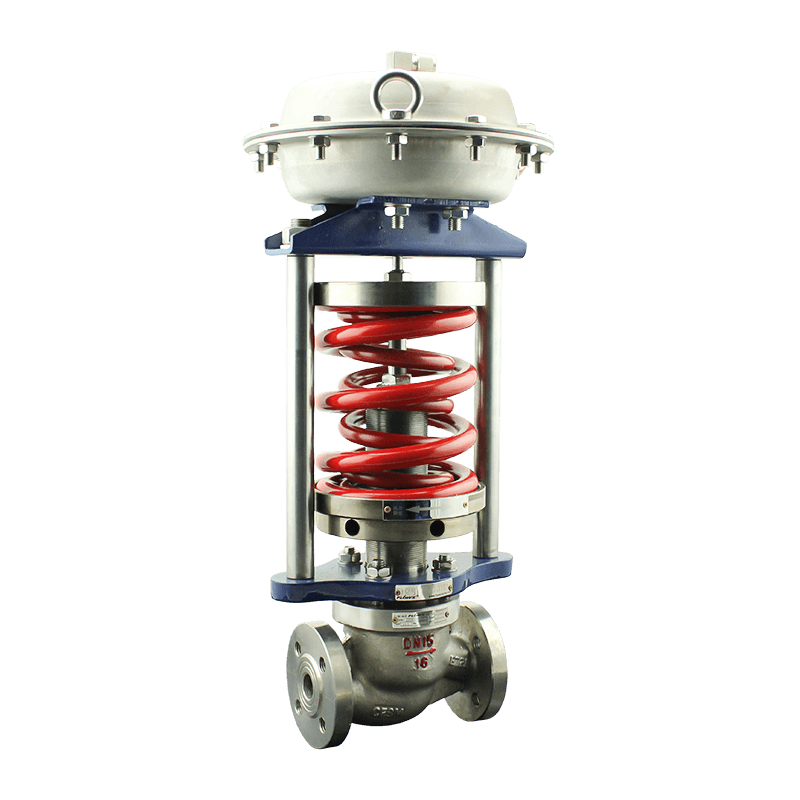 Self-Operated Pressure and Flow Control ValveA self-actuated regulator for gas, liquid and steam lines that needs no external power; review its pressure-reduction and stabilization capabilities.View Product →
Self-operated versions need no instrument air and no power, which is why they appear on steam, water, gas and nitrogen lines. Their limits, and the cases where they are the wrong answer, are set out in this guide to self-actuated regulators that work without external power.
Superimposed and built-up back pressure
- Superimposed back pressure exists at the outlet before the valve opens, usually from a shared discharge header, and it shifts the effective set pressure of an unbalanced design.
- Built-up back pressure appears only while the valve flows and is a property of the downstream piping rather than the valve.
- Most pilot operated relief valves tolerate superimposed back pressure far better than a plain spring loaded valve, but only when the pilot is specified as balanced.
Where the back pressure comes from an intentional gas blanket rather than a relief header, the answer is usually a controlled sealing device instead of a larger relief valve.
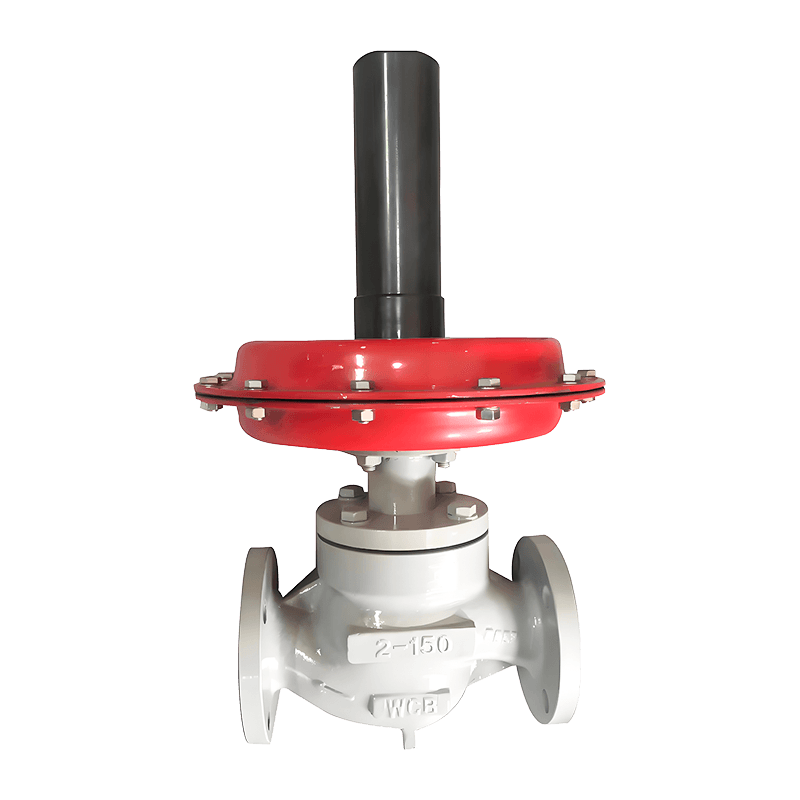 Nitrogen Relief Valve for Tank Pressure ControlA spring-loaded relief device that vents nitrogen when tank pressure exceeds the set point and closes as pressure falls; helps reduce gas waste.View Product →
A relief valve is not a regulator. A pilot operated relief valve stays closed until set pressure and then opens; a regulator modulates continuously. Using one for the other gives either poor control or an unsafe installation.
Pilot Operated Solenoid and Check Valves
In a pilot operated solenoid valve the coil only moves a tiny pilot orifice; line pressure then shifts the main diaphragm, so a small coil can switch a flow that a direct acting valve of the same size could not handle.
The trade-off is a minimum pressure differential, often around 0.5 bar, before the valve opens reliably. Below that figure a direct acting design is the honest choice. A blocked pilot orifice is the classic failure mode, which is why a strainer upstream is not optional.
The coil does not open the main seat. It only vents the pilot chamber, which is why pilot operated solenoids stay compact at high flow and why they stop working the moment the pilot passage fouls.
Explosion-proof versions are common where the pilot sits in a hazardous area, and the wider range is listed in the solenoid valve catalogue.
 VATTEN Explosion-Proof Solenoid Valve for Hazardous AreasAn integrated aluminum-bodied solenoid valve with EXDIBT4/EXDICT6 explosion protection, 2–10 bar operating pressure, and SIL3 certification for hazardous-area control.View Product →
Pilot operated check valves
In hydraulic circuits the same idea unlocks reverse flow: the check stays closed against backflow until a separate pilot pressure pushes the poppet off its seat, which is how a load is held and then deliberately released.
What to Send Before You Ask for a Quote
A pilot operated valve cannot be selected from size and set pressure alone; the data below decides whether the design is even viable.
| Data point | Why it changes the answer |
|---|---|
| Set pressure and normal operating pressure | Defines the margin the pilot must hold without simmering |
| Fluid, phase and temperature | Drives seal material, pilot type and whether a filter is needed |
| Required capacity | Sizes the main orifice, which is independent of the pilot |
| Superimposed and built-up back pressure | Decides whether a balanced pilot is mandatory |
| Code and certification | Sets capacity verification, marking and test requirements |
| Accessories | Lift indicator, remote sensing and limit switch change the assembly |
Common specification mistakes
- Quoting set pressure but not operating pressure, which hides a margin problem until commissioning.
- Treating a pilot operated relief valve and a pilot operated regulator as interchangeable in a line list.
- Ignoring pilot tubing length and routing, which adds sensing lag on long runs.
- Assuming a pilot will survive dirty media without a strainer or a different pilot type.
Quote operating pressure, not only set pressure. The margin between them is what the pilot has to hold, and it is the first number a supplier will ask for.
Frequently Asked Questions
Four questions come up in almost every pilot operated valve inquiry. The short answers follow.
Is a pilot operated valve the same as a pilot operated relief valve?
No. The relief valve is one member of the family. The same two-stage principle also appears in pressure regulators, solenoid valves and hydraulic check valves, where the pilot controls flow rather than providing overpressure protection.
Does a pilot operated relief valve still use a spring?
Yes, but a small one inside the pilot. It sets the pressure at which the pilot reacts, while the main disc is held shut by dome pressure, which is why the main valve stays compact at high set pressures.
Can a pilot operated valve handle dirty or crystallising media?
Often not without help. Pilot orifices and restrictors are small by design, so strainers, heating, flushing connections or a switch to a spring loaded design are worth discussing before the order rather than after the first blockage.
How close to set pressure can it operate?
Many suppliers quote up to about 95 percent of set pressure for pilot operated relief valves against roughly 90 percent for spring loaded ones. Confirm the figure for the specific pilot, because seat material, temperature and back pressure all move it.
Size the main orifice for capacity, choose the pilot for the medium and the back pressure, and keep the restrictor and pilot filter on the maintenance schedule. Most pilot operated valve problems in the field trace back to one of those three decisions.