 English
 Deutsch
 Indonesia


Content
- 1 Material Fundamentals: What You Are Actually Working With
- 2 Performance Comparison: A Clear-Eyed Look at the Numbers
- 3 Where Cast Iron Gate Valves Belong
- 4 Where Stainless Steel Gate Valves Are the Right Call
- 5 Decision Framework: Four Questions That Determine the Answer
- 6 Actuation Choices Across Both Materials
- 7 Summary
A gate valve that corrodes in its second year costs far more than the price tag suggests — unplanned shutdowns, contamination risk, and emergency replacement labor compound quickly. The material decision made at the specification stage is what separates a two-year valve from a twenty-year one. This guide cuts straight to what matters: how stainless steel and cast iron gate valves actually differ, where each belongs, and how to choose without second-guessing.
Material Fundamentals: What You Are Actually Working With
Cast iron gate valves use gray or ductile iron as the body material. The alloy is inexpensive to cast, dimensionally stable, and absorbs vibration well — which is why it has been the default choice for low-pressure distribution systems for over a century. The trade-off is straightforward: cast iron corrodes over time, particularly in the presence of aggressive media, and it becomes brittle under mechanical shock or thermal cycling.
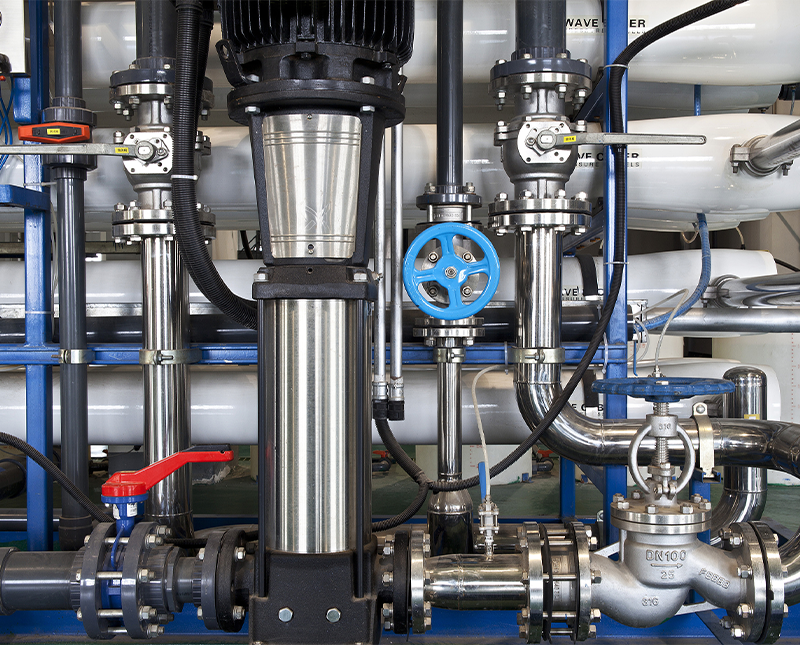
Stainless steel gate valves use austenitic grades — most commonly 304 (CF8) or 316 (CF8M). The chromium content, typically 18–20%, forms a passive oxide layer that self-repairs in most environments. Grade 316 adds molybdenum, which strengthens resistance to chloride-induced pitting, making it the preferred choice anywhere saltwater, chlorinated water, or halide-containing chemicals are present. Stainless steel gate valves handle temperatures from −198°C to 816°C, a range no cast iron valve can match.
Performance Comparison: A Clear-Eyed Look at the Numbers
| Parameter | Cast Iron Gate Valve | Stainless Steel Gate Valve |
|---|---|---|
| Typical pressure rating | PN6–PN16 (low to medium) | PN16–PN40 and above |
| Temperature range | −10°C to 200°C | −198°C to 816°C |
| Corrosion resistance | Low — degrades in aggressive media | High — passive oxide layer, self-healing |
| Upfront cost | Lowest | Moderate to high |
| Lifecycle cost | Higher if corrosion is a factor | Lower over long service life |
| Mechanical shock resistance | Low (brittle) | High (tough, ductile) |
| Hygienic suitability | Not suitable | Suitable (food, pharma, potable water) |
Where Cast Iron Gate Valves Belong
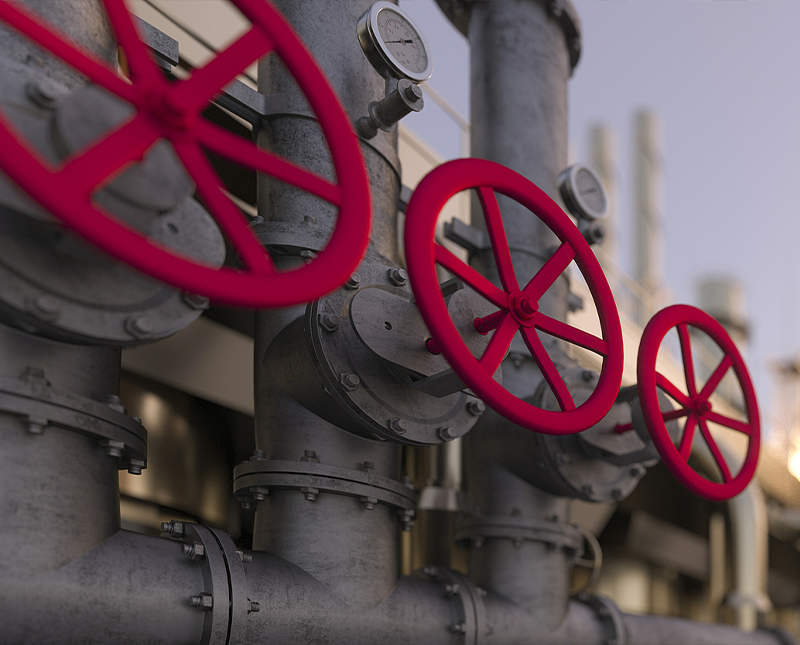
Cast iron is the rational choice when three conditions align: low to medium pressure (PN16 or below), non-corrosive media (clean municipal water, treated wastewater, ambient-temperature air or neutral liquids), and cost sensitivity. Municipal water distribution mains, building fire protection systems, and residential compound pipe networks are classic applications. The valves are heavy, straightforward to install, and perform reliably when the media and environment stay benign.
Vatten's pneumatic cast iron gate valve and electric cast iron gate valve extend the material's value into automated pipeline control — actuated operation eliminates the slow manual opening stroke that makes cast iron gate valves impractical in high-cycle applications. For underground installations or large-diameter municipal trunk lines where occasional operation is the norm, cast iron remains the most cost-effective material available.
One selection error to avoid: cast iron is not appropriate for systems that carry chlorinated water at elevated concentrations, seawater, or acidic effluent. In those conditions, the material will corrode from the inside out regardless of external coatings, and premature failure is almost certain.
Where Stainless Steel Gate Valves Are the Right Call
Stainless steel gate valves earn their higher upfront cost in four types of environments: corrosive media, hygienic applications, extreme temperatures, and high-cycle automated systems. Chemical plants, coastal seawater pipelines, water treatment facilities handling post-chlorination flows, and food or pharmaceutical production lines all fall into this category.
Grade 316L stainless steel outperforms 304 wherever chloride ions are present. The molybdenum addition raises the critical pitting potential significantly — in practical terms, 316L stays passive in brackish water and dilute hydrochloric acid where 304 would begin to pit within months. For manual operation in corrosive or hygienic settings, Vatten's manual stainless steel gate valve with flat and conical sealing options covers both cut-off and throttling needs across a wide range of media including steam, oils, slurry, and radioactive fluids.
Automated variants extend the material's advantages into remote or high-frequency operation. The pneumatic stainless steel gate valve and electric stainless steel gate valve bring precise actuation control to pipelines where manual access is limited — offshore platforms, high-bay chemical reactors, and automated water treatment sequences being the most common examples.
Decision Framework: Four Questions That Determine the Answer
Rather than comparing materials in the abstract, work through these four questions in order.
1. What is the media? If it contains chlorides, acids, bases, or any aggressive chemistry, stainless steel is required. Clean neutral water at ambient temperature? Cast iron is viable.
2. What are the pressure and temperature conditions? Above PN16, or above 200°C, cast iron is out of its rated range. Stainless steel handles both.
3. Is hygienic integrity required? Food processing, pharmaceutical manufacturing, and potable water applications demand a material that can be cleaned without surface degradation — stainless steel only.
4. What is the true lifecycle cost? Cast iron costs less to buy. If the operating environment is benign and the valve will cycle infrequently, that upfront saving is real. If corrosion will force replacement within five years, the stainless steel option — with lower maintenance requirements and a longer service life — is the cheaper choice over time. Stainless steel gate valves are valued precisely because their long service life and reduced replacement needs make them cost-efficient over the full asset life.
Actuation Choices Across Both Materials
Both cast iron and stainless steel gate valves are available in manual, pneumatic, and electric configurations. The actuation choice is independent of material and depends on cycle frequency, response time requirements, and whether the installation needs remote or automated control. For occasional isolation duty in accessible locations, manual operation is sufficient. For pipelines that cycle frequently, require rapid response, or sit in hazardous or remote locations, pneumatic or electric actuators add meaningful operational value.
When the application calls for handling abrasive or viscous slurry alongside standard gate valve duty, a knife gate valve warrants consideration — the thin blade design cuts through fibrous or particle-laden media that would jam a conventional wedge gate.
Summary
The choice between stainless steel and cast iron gate valves comes down to operating environment, not product preference. Cast iron delivers reliable, cost-effective performance in low-pressure, non-corrosive applications where the economics of a simpler material make sense. Stainless steel is the correct specification everywhere that corrosion, hygiene, extreme temperature, or long asset life are genuine requirements. Getting that call right at the design stage is one of the most straightforward ways to reduce unplanned maintenance and extend system reliability.