 English
 Deutsch
 Indonesia



Control valve vibration refers to the rapid opening and closing of the valve during operation, indicating that the control valve cannot stably maintain an appropriate position to sustain the predetermined process conditions. This condition causes the process variables in the closed-loop system to fluctuate around their setpoints.
Possible causes of vibration include the following:
- Controller issues: Improper controller settings or failure of internal components may result in unstable control signals, which in turn cause valve vibration.
- Faulty control valve components: Wear or damage to specific valve parts (such as the plug, seat, or actuator) can also lead to vibration.
- Impact of operating methods: In some cases, even without hardware defects, inappropriate operating procedures or poor process design can induce vibration.
Persistent valve vibration not only impairs the performance of the gland seal, but may also cause significant deviation from the required setpoints, affecting production efficiency and product quality. Therefore, it is critical to accurately identify the root cause of the vibration in order to implement the necessary corrective actions, resolve the vibration issue, and improve the overall performance of the control loop.
This paper provides an in-depth discussion of the various potential factors causing valve vibration and their diagnostic methods, aiming to help readers better understand and address this common yet complex industrial control problem.With this knowledge, engineers and technicians can more effectively maintain and optimize their control systems to ensure smooth operation of production processes.
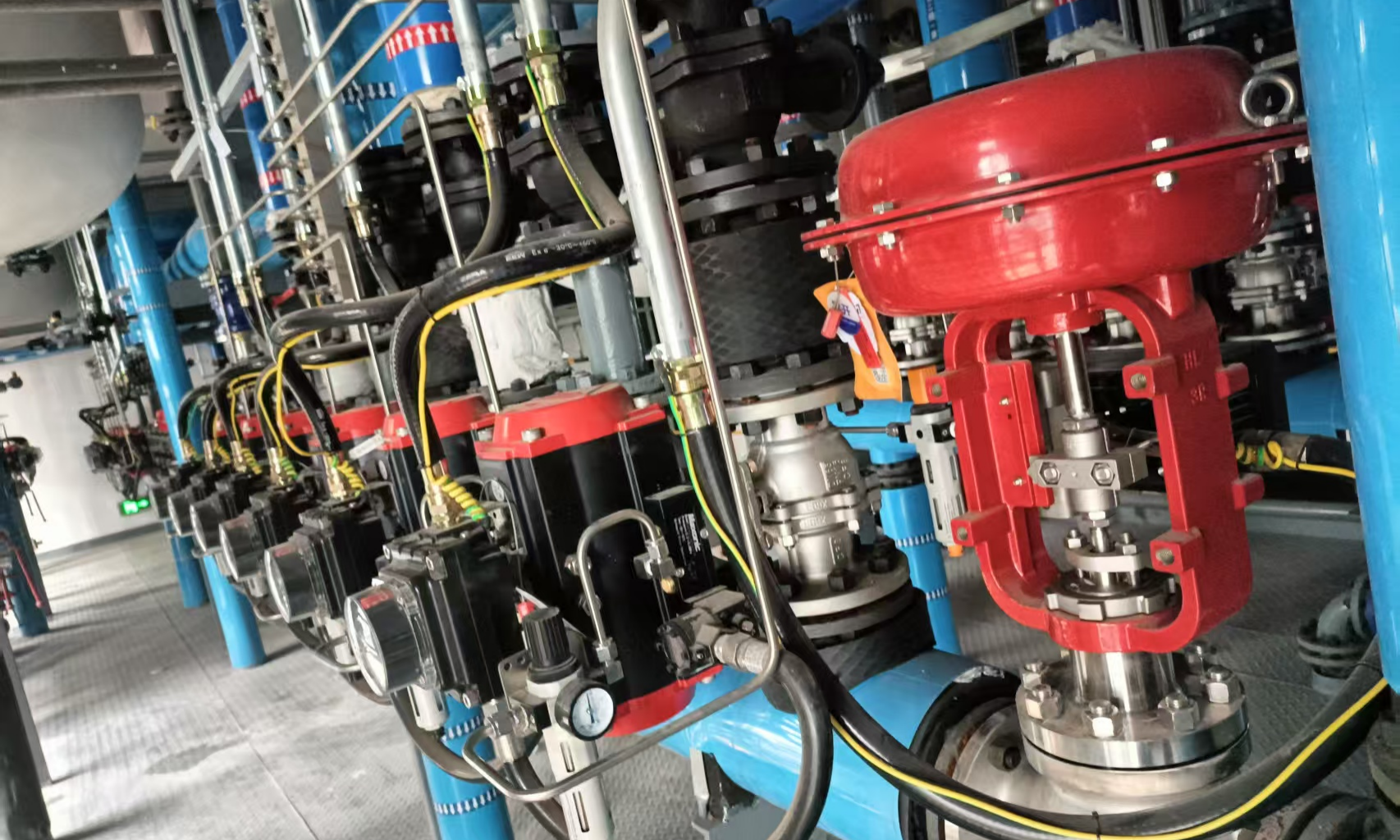
What causes valve vibration?
1.Control loop issues
Switch the controller from automatic to manual mode and evaluate the response using standard procedures to determine if the problem lies within the loop.
If the oscillation stops, the fault is in the control loop. Such issues typically occur in nonlinear processes. Hunting may also arise due to hysteresis, resulting in slow response of the process loop.
The controller configuration cannot resolve this mechanical issue. Valve sticking caused by loop problems can be fixed by properly adjusting the controller. If this is not documented in the manual, other causes may be involved, such as actual variations in process variables, valve sizing, etc.
2.Control Valve Sizing
The controllability of a valve is largely affected by the size of the control valve. The flow coefficient (Cv) refers to the volume of water at 600°F that can pass through a fully open valve with a pressure drop of 1 psi.
Cv is determined by the valve design and remains constant. Control valves of the same size may have different Cv values if they have different body styles or internal trim. Problems with control valve sizing become apparent when the total process gain is either too low or excessively high. Control valves are often sized to accommodate future flow increases, which may result in a valve slightly larger than required for the current application, thus compromising control accuracy.
An oversized valve leads to excessive opening or closing, causing sticking, packing damage, and inaccurate control. Conversely, an undersized valve requires a larger pressure drop to maintain proper flow, may lack the necessary capacity, increase pump pressure, and raise the risk of cavitation. Cavitation and flashing are major causes of damage to control valve internals, which in turn lead to fluctuations in process control.
3.Control Valve Positioner
The valve positioner achieves the balance position required by the control process variable for the control valve actuator by adjusting air pressure.
It contains a spool to control air flow. However, long-term operation or dust particles in the air may cause wear to the spool, making it stuck at a specific position and resulting in an abnormal rise in air pressure. Once the air pressure increases, the spool is released from the stuck position, causing overshoot, unstable valve position, loss of effective control over the valve, and deviation.
The positioner may be exposed to high temperatures due to radiant heat from surrounding process tanks, which is another factor causing control valve sticking attributed to the positioner, and may damage the positioner seals and tubing. The positioner detects the actual valve position using a feedback link to adjust its output. If the feedback link fails due to fluid forces, friction, or other reasons, the valve may not operate properly. Modern smart positioners have a unique function to identify such deviations.
4.Static Friction During Valve Stroke
When a valve encounters static friction (i.e., stiction), it stops moving at a specific position and requires additional force to restart. This phenomenon may be caused by hardened gland packing or sticky flow within the valve plug. When the applied force is sufficient to overcome the sticking point, the valve moves to an overshoot position, causing the process variable to exceed the setpoint. Such sticking can be observed by monitoring the relationship between the controller output and the process variable.
The valve actuator should be properly sized, and the torque on the gland seal should be within an acceptable range to prevent sticking.
5.Hardware Defects
In addition, wear inside the valve plug may cause valve sticking, preventing the valve from closing completely. Damage to the valve plug will cause the control valve to lose control over its high operating range.
In control valves, gland packing is used to prevent process medium from leaking out of the valve body. If damaged, it will result in leakage at the bonnet, posing a threat to workplace safety. Leakage in the valve actuator is another factor that causes valve hunting.
The valve stem is initially positioned precisely by the valve positioner. However, due to leakage, the stem will move continuously, forcing the positioner to adjust its output repeatedly, creating an infinite search for the stem position. This is one of the common hunting phenomena in control valves under steady-state control signals.
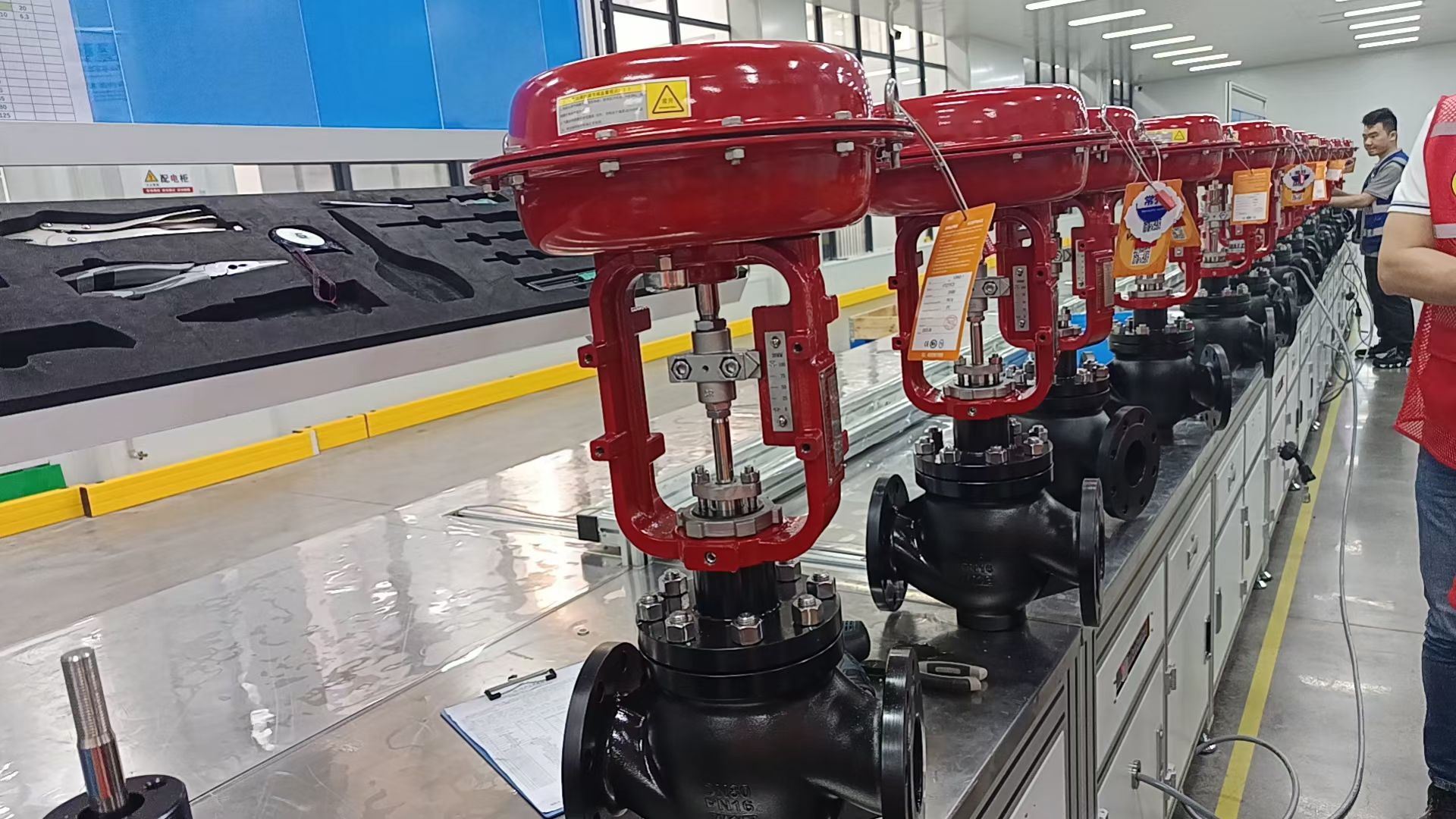
How to Prevent Valve Vibration?
1.Analysis and Diagnosis of Oscillation
Oscillation in control valves can be caused by loop issues or other influencing factors. Switch the controller to manual mode and observe whether the oscillation stops to identify the root cause. If the oscillation ceases, it indicates the problem lies within the control loop itself and can be resolved through proper adjustment.
Internal oscillation may result from improper tuning or equipment malfunction. If the valve still behaves unstably in manual mode, the problem may stem from damaged valve components or changes in process parameters.
Stiction and positioner overshoot are the most common causes of control valve sticking. Charts can clearly illustrate the valve output response when stiction is present.
2.What Are the Main Causes of Control Valve Sticking?
To determine whether control valve sticking is due to improper controller tuning or mechanical failure of the valve itself, it is recommended to temporarily bypass the controller output, supply a constant pressure to the control valve actuator, and observe its output response.
A linear potentiometer (position transmitter) is used to detect stem movement, while a pressure sensor (smart positioner) measures the positioner output pressure. By connecting these sensors to a data acquisition system and visualizing the data with monitoring software (such as LabVIEW), a comparison graph between valve stem travel and controller output can be generated.
3.Control Valve Loop Troubleshooting
The microcontroller receives input signals from the controller setpoint and pressure sensors. When pressure deviation from the setpoint is detected and occurs more than five times, it is regarded as hunting behavior.
In this case, the controller output is isolated, and the current-to-pressure (I-P) converter automatically generates a pressure corresponding to the setpoint, which is fed as input to the control valve positioner. Check the deviation again after a few seconds. If the deviation is reduced, the control valve and its accessories are functioning properly.
Therefore, special adjustments to the controller loop are required. If the valve still exhibits problems, it may be due to internal component damage or sticking caused by the gland seal.
A graph with dead band can easily locate the specific sticking position. If continuous bouncing occurs with no evidence of dead band, vibration is most likely caused by damage to components such as the valve plug. This method can also help determine whether hunting exists across the entire control range or only within certain specific operating intervals.
4.Control Valve Maintenance Procedure
If a control valve exhibits sticking during operation, the troubleshooting steps involved are relatively complex. To ensure safe and efficient system restoration, it is recommended to follow the structured maintenance procedure below:
1.Preliminary Diagnosis and Safety
IsolationSwitch the control valve to manual mode or bypass operation to ensure no impact on the process flow; cut off air supply, power supply and signal source, depressurize the actuator, and lock in accordance with LOTO (Lockout/Tagout) procedures; take photos of valve position, instrument wiring, air connections, etc., for convenient reassembly.
2.External Inspection and Functional Testing
Verify stable output pressure of the I-P converter and ensure no blockage or water accumulation in the filter pressure regulator; use a hand-held operator or analog signal source to input 4–20 mA and observe smooth movement of the valve stem; confirm no looseness, deformation or corrosion in mechanical transmission components.
3.Disassembly and Internal Inspection
Carefully separate the actuator from the valve body to avoid damaging the valve stem threads; measure valve stem straightness (runout ≤ 0.05 mm); check if the packing is too tight, carbonized or contaminated; inspect whether the gland is misaligned causing unilateral friction.
Check internal components: valve plug and seat for erosion, corrosion, coking or foreign matter blockage; guide sleeve for wear or fouling; for rotary valves (e.g., ball valves, butterfly valves), check bearings or bushings for seizure.
4.Targeted Treatment
Clean contaminants using lint-free cloth and suitable solvents (e.g., alcohol, special cleaning agent), and apply high-temperature grease (e.g., Klüberpaste) to the valve stem; replace worn plug, aged packing, cracked O-rings, etc., with original or equivalent spare parts; when reinstalling packing, tighten evenly in stages to ensure moderate resistance to valve stem movement (typically operating torque ≤ 70% of rated value).
5.Reassembly and Calibration
Restore all connections according to photos taken before disassembly; perform zero (0%), span (100%) and linearity calibration using the positioner; input step signals (e.g., 50%→75%→25%) and observe stable response; record valve position feedback curve and check for dead band, jumping or hysteresis; if hunting still exists, analyze improper controller tuning or local valve sticking combined with historical trends.
6.Commissioning and Monitoring
First operate in manual trim mode, then switch back to automatic after confirming no abnormalities; monitor valve position fluctuation, deviation frequency and process parameter stability; record fault symptoms, corrective actions and replaced parts for subsequent reliability analysis.